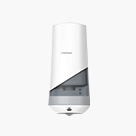
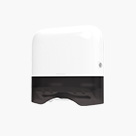

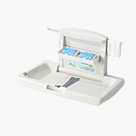


Interhasa Toilet Paper Dispenser E1008
Interhasa Toilet Paper Dispenser Model E1008, durable ABS construction with a compact design, perfect for commercial bathroom settings.
Explorer le produitMeet Us at 140th Canton Fair! Phase 1 Booth:3.1M31 I Phase 2 Booth:10.1 I33-34


Pour un distributeur de serviettes en papier accessible selon l'ADA, la partie actionnée par l'utilisateur—comme le capteur, la poignée ou la sortie de serviettes—doit généralement se situer entre 15 et 48 pouces au-dessus du sol fini pour une portée sans obstruction. Le meuble lui-même n'est pas le point de mesure. Les comptoirs, la direction d'approche et les saillies des voies de circulation peuvent modifier la configuration conforme.
Sur les chantiers à fort trafic, même une légère erreur de mesure lors de la phase de pré-installation peut entraîner des inspections échouées et une remédiation murale coûteuse. Les normes ADA pour la conception accessible exigent que les pièces utilisables restent dans des plages de portée spécifiques, aidant à garantir commercial restrooms remain accessible to all users.
Establishing the correct ADA bathroom accessories heights requires more than just following a blueprint; it demands on-site verification of reach ranges and floor clearances. I also confirm dispenser dimensions after tile installation because finished floor height often changes from the original layout, potentially pushing a fixture out of compliance. Selecting a properly designed paper dispenser is the first step toward a functional, code-compliant environment.
The foundational standard for a forward approach requires the unit’s operable part to sit no lower than 15 inches and no higher than 48 inches above the finished floor. These measurements ensure that any user, including those in wheelchairs, can effectively access hygiene equipment without excessive leaning or stretching. This range is a strict technical limit designed to accommodate the maximum vertical reach range of a seated individual.
N'utilisez pas une seule hauteur de montage pour chaque mur. Identifiez d'abord si l'utilisateur s'approche de face ou de côté, puis mesurez toute obstruction. Selon les normes ADA de 2010, une portée haute sans obstruction est de 48 pouces maximum. Une portée avant obstruée peut être réduite à 44 pouces lorsque l'obstruction a une profondeur supérieure à 20 et jusqu'à 25 pouces. Une portée latérale obstruée peut être réduite à 46 pouces lorsque la profondeur de portée dépasse 10 et va jusqu'à 24 pouces. Confirmez les conditions complètes dans la section 308.

| Condition d'installation | Exigence | Point de mesure correct | Erreur courante | Base officielle |
|---|---|---|---|---|
| Portée avant sans obstruction | Pièces utilisables : 15–48 po au-dessus du sol fini | Partie la plus haute que l'utilisateur doit actionner, comme un capteur, un levier ou un point de distribution | Mesurer jusqu'au sommet du meuble ou utiliser la règle du distributeur de papier hygiénique | 2010 ADA §308.2.1, 309.3 |
| Portée avant obstruée | Maximum 48 po lorsque la profondeur de portée ne dépasse pas 20 po ; maximum 44 po lorsque la profondeur dépasse 20 po et ne dépasse pas 25 po | Pièce utilisable, mesurée avec la profondeur d'obstruction et l'approche vérifiées | Appliquer 48 po sans vérifier le comptoir ou la profondeur d'obstruction | 2010 ADA §308.2.2 |
| Portée latérale sans obstruction | Pièces utilisables : 15–48 po au-dessus du sol fini | Partie utilisable la plus haute avec une approche latérale valide | Utiliser l'ancien maximum de 54 po | 2010 ADA §308.3.1, 309.3 |
| Portée latérale obstruée | Maximum 48 po lorsque la profondeur de portée ne dépasse pas 10 po ; maximum 46 po lorsque la profondeur dépasse 10 po et ne dépasse pas 24 po, avec l'obstruction ne dépassant pas 34 po de hauteur | Pièce utilisable plus hauteur et profondeur de l'obstruction | Vérifier la hauteur mais pas les dimensions de l'obstruction | 2010 ADA §308.3.2 |
| Espace libre au sol | Prévoir au moins 30 × 48 po et le positionner pour l'approche requise | Surface de sol fini desservant le distributeur | Permettre aux poubelles, portes ou autres équipements de bloquer l'approche | 2010 ADA §305, 309.2 |
| Opération | Utilisable d'une seule main, sans saisie serrée, pincement ou torsion ; force d'activation ne dépassant pas 5 lbf | Poignée, levier, bouton, capteur ou autre composant utilisable | Vérifier uniquement la hauteur de montage | 2010 ADA §309.4 |
For coordinated accessible washrooms, the dispenser layout should be checked together with grab bars, door swings, lavatories and waste bins.
Operating Mechanism Requirements
Compliance extends beyond the mounting brackets; the internal mechanism must also meet strict ADA paper towel dispenser requirements. The unit must be operable with one hand and without any need for tight grasping, pinching, or twisting of the wrist. Many older, manual-crank dispensers fail this standard because they require significant manual dexterity to retrieve the paper.

A manual dispenser must require no more than 5 pounds of operating force. This limit ensures the fixture is usable by those with limited mobility, helping satisfy ADA manual dexterity requirements. I often recommend sensor-activated models for high-traffic zones because they eliminate physical force requirements entirely. Regular maintenance checkups are essential to ensure that manual pull-tension hasn’t increased due to mechanical wear or internal paper jams.
Interhasa Toilet Paper Dispenser Model E1008, durable ABS construction with a compact design, perfect for commercial bathroom settings.
Explorer le produit
Even a perfectly mounted unit is non-compliant if a wheelchair user cannot physically maneuver into the correct ADA paper towel dispenser location. The floor area must be level and maintained without permanent or temporary obstructions that would prevent a forward or parallel approach to the fixture. Proper planning requires coordinating the placement of trash receptacles so they do not conflict with the clear access route.
The ADA requires a clear floor space of at least 30 inches by 48 inches centered on the dispenser. Guidance from ADA Compliance Inspections also highlights the importance of maintaining accessible paper towel dispensers within the required reach ranges to help avoid common compliance issues. One common field mistake is failing to account for the swing of the stall door, which can often encroach on this mandatory clearance footprint. I always recommend installers mark this 30×48 rectangle on the subfloor during the rough-in stage to verify that all subsequent partitions respect the accessibility boundary.
Mounting a dispenser over a vanity or a trash receptacle changes the user’s effective reach capability, requiring a lower installation point. This reach-over distance is a frequent failure point during final building commissioning if the contractor hasn’t accounted for the depth of the obstruction. As the depth of the counter increases, the maximum ADA toilet paper dispenser height must be adjusted downward to remain accessible.
When an obstruction is between 20 and 25 inches deep, the mounting height must be reduced to 44 inches for a forward reach. If the obstruction is less than 20 inches, the 48-inch limit remains the standard. Professional installers always double-check these depths during the rough-in stage because fixing an over-mounted dispenser after the tile is set is a costly process.
While federal rules provide the baseline, some states may have nuances regarding the placement of bathroom accessories near grab bars. These local regulations often focus on ensuring that one fixture does not block the safe use of another, particularly in critical safety areas like ADA-compliant stalls. It is vital to consult with a local inspector or a certified accessibility specialist to ensure the ADA toilet paper dispenser height complies with all applicable regional variations.
Les distributeurs de serviettes en papier et les distributeurs de papier hygiénique ne sont pas des sujets interchangeables. Un distributeur de serviettes en papier près d'un lavabo est évalué principalement selon les dispositions relatives au chemin accessible, à la portée et à l'utilisabilité. Les distributeurs de papier hygiénique à côté d'une cuvette de toilettes ont également des exigences de localisation liées à la cuvette et aux barres d'appui. Maintenez le nom du produit, le schéma et la section citée cohérents tout au long de la page.
Even when the mounting height is correct, dispensers may still fail ADA inspections because of:
Checking these items before final inspection can help contractors avoid costly rework and project delays.
| Installation Scenario | Recommended Height |
|---|---|
| Standard wall installation | 42–48 in |
| Above a countertop (<20 in deep) | Up to 48 in |
| Above a countertop (20–25 in deep) | Max. 44 in |
| Accessible restroom | 42–44 in preferred |
| High-traffic commercial restroom | 42–48 in |
Although ADA allows a maximum height of 48 inches in most cases, many commercial restroom designers install dispensers at 42–44 inches to provide easier access for a wider range of users.
Mesurez jusqu'à la partie utilisable la plus haute—le capteur, le levier, la poignée ou le point de distribution de serviettes que l'utilisateur doit atteindre—pas automatiquement jusqu'au sommet du meuble. Confirmez la direction d'approche, la profondeur d'obstruction et l'élévation du sol fini sur le plan du projet.
Les équipes de projet peuvent comparer les dimensions du meuble et les formats de distribution dans la gamme de distributeurs de papier Interhasa avant d'approuver le plan de pré-installation.
Demander les dimensions du distributeur de papier, les gabarits de montage et un devis de projet.
Voir plus →Mastering the ADA toilet paper dispenser height and reach ranges is a hallmark of professional facility management and quality construction. By integrating these technical standards into the early design and rough-in phases, you ensure a restroom environment that is both legally compliant and operationally efficient. This attention to detail reduces the risk of litigation and ensures that every patron can use the facility with dignity. For high-performance, code-compliant solutions, choose an Interhasa paper dispenser.

The standard paper towel dispenser height from floor is 42 to 48 inches to the highest operable part, ensuring compliance with the 48-inch federal maximum reach limit.
If the counter or obstruction is between 20 and 25 inches deep, the mounting height must be lowered to a maximum of 44 inches to remain compliant with forward-reach standards.
Yes, whether manual or touch-free, the sensor or dispensing point must be within the 15-to-48-inch reach range and have the required clear floor space.