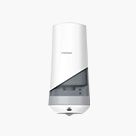



Dispensador de sabão manual Interhasa modelo F7020
Capacity: 350ml * 1 / * 2 / * 3
Material: ABS
Meet Us at 140th Canton Fair! Phase 1 Booth:3.1M31 I Phase 2 Booth:10.1 I33-34

Choose a hospital soap dispenser by matching the care setting, hand-hygiene workflow, dispensing method, refill system, cleaning routine, mounting conditions and sample performance. Confirm the exact soap, dose, refill format and installation drawing before ordering. Touchless dispensing removes a user contact point but does not replace the facility’s cleaning protocol. Interhasa makes soap dispensers in-house and offers manual and automatic formats, but the right model still depends on your site and written specification before you place an order.
A soap dispenser for hospitals is not one specification. The same building may contain public washrooms, staff facilities, patient-accessible rooms and back-of-house service areas, each with different users, cleaning routines and supervision. A unit that suits visitors may fail at a busy staff sink.
This guide gives facilities managers, procurement teams and distributors eight practical checks before ordering. You will get a care-setting and workflow map, a manual-versus-touchless comparison, a compatibility and cleaning checklist, an eight-point sample scorecard and an RFQ template. It does not set clinical requirements; use your facility’s hand-hygiene and cleaning protocols alongside it.
Start with the care setting: the physical area, its users, and how it is supervised and cleaned. A public washroom, a staff washroom and a patient-accessible washroom may look similar in a catalogue but differ in traffic, assistance needs, refill control, cleaning frequency and fault reporting. Record those details before comparing models.
Then walk the hand-hygiene workflow: the route a person takes from approaching the sink to leaving the area. Where does the user stand? Can someone reach the dispenser without stepping into a door swing or queue? Can cleaning staff reach the reservoir, nozzle and fixings without moving other fittings? A dispenser that interrupts this route will be worked around, and workarounds usually create extra cleaning or maintenance.
Your facility’s protocol sets each area’s requirements; this guide translates them into a product specification.

Manual dispensing requires pressing a lever, button or pump. It has fewer electronic parts, but the operating surface is a shared contact point. Touchless dispensing uses a sensor to release soap without touching the housing. It removes that contact point but adds power, sensor positioning and electronic service checks.
Neither method is automatically better. The automatic versus manual soap dispenser comparison covers the trade-offs in more detail. Test it in the real workflow: can a user operate it from the intended side without touching a nearby wall or fitting?
O Interhasa F7020 is listed as a manual liquid dispenser with a 350 ml capacity per head in one-, two- or three-head formats, an ABS body and stated widths from 60 mm to 195 mm depending on the configuration. Its page does not state dose volume, refill method or mounting bracket, so confirm them on the current drawing. Multi-head formats also need enough space for each user.
O Interhasa F9303 is listed as an automatic foam dispenser with a 300 ml capacity, ABS body and 99 × 72 × 182 mm dimensions. Its page does not state the power source, refill format, dose volume or wall-mounting method. Because it is named a desk unit, do not assume wall mounting without written confirmation. The soap dispenser range e product collection show the available manual, automatic, liquid and foam formats to shortlist against your requirements.
The refill system covers how soap enters the dispenser and how staff handle the container. A bulk-fill system has a reservoir that staff clean and refill from larger soap containers. A cartridge system uses a replaceable, often sealed, soap pack. Each changes cleaning, storage, packaging waste, supplier dependence and the risk of loading the wrong product. The bulk-fill versus cartridge comparison explains those operational differences.
Compatibility is more than fitting the bottle into the housing. Confirm the soap format, formulation and viscosity—a liquid’s resistance to flow. Too thick or too thin can change the dose, cause dripping or slow pump recovery. Foam soap also needs a mechanism and formulation designed for foam. The F7020 page lists liquid output, while the F9303 page lists foam output. Treat those as page-stated starting points, not proof that any liquid or foam product will work.
Ask the supplier for approved soap types, dose volume, refill dimensions and the priming procedure. Prime means clearing air from the pump and nozzle so the first dose is representative. Test the exact refill you plan to stock; a sample filled with different soap proves little about dose consistency, clogging or foam quality. Capacity also needs a service calculation: the foaming soap capacity guidance shows how to compare dose, traffic and refill interval.

The cleaning protocol is the approved steps, products, tools and responsibilities for cleaning and servicing the dispenser. It should cover the exterior, operating surface, sensor window, nozzle, reservoir, cap and surrounding area, and state who may open the unit and what to do with a partial refill.
Do not top off a partially empty reservoir unless the facility’s protocol explicitly allows it. Protocols often require the reservoir to be emptied, cleaned, dried and inspected before new soap is added. Mixing new soap with old can also hide a compatibility problem. Follow the manufacturer’s instructions and the facility’s cleaning protocol, and keep cleaning chemicals away from electrical parts.
Make the refill task observable. Time a full service, from opening the unit through cleaning, refilling or replacing the pack, priming and testing. Note spills, awkward tools and whether staff can see the soap level. The foam dispenser refill steps are a useful starting point, but the model manual and facility procedure take precedence.
For touchless units, add the sensor and power source to the cleaning and fault routine. Record the model, indicator behavior and exact symptom before replacing parts. Dirty sensors, empty reservoirs, air locks, incompatible soap and weak power can all look alike. The automatic dispenser troubleshooting guide shows why staff should diagnose by symptom rather than assume the pump has failed.
Accessibility combines approach space, reach, operation, clearance and freedom from avoidable obstruction—not just mounting height. Check the wall or counter substrate, the fixing method, the dispenser’s projection from the wall, the sink position, mirror clearance, door swing and the space needed to refill and clean. A three-head unit may need more lateral clearance than a single-head model even when the height is the same.
Use the local accessibility standard and the facility’s own user feedback; this article does not set a universal mounting height. The public washroom layout guidance covers circulation and washroom planning, but its dimensions should be checked against the applicable local code. Test the proposed position with the actual sample and a representative group of users, including people with limited reach or grip.
Confirm the installation drawing before production. The drawing should show the fixing points, required substrate, overall dimensions, refill clearance and any power or cable route. If the site cannot provide that substrate or clearance, change the model or location rather than relying on a generic wall plug.
Score each check as pass, fail or needs evidence. Record the evidence behind the score; a sales photo is not evidence of fit. Use the same scorecard for every model.
A bench-test pass can still fail at the sink. Test it in the intended location or a close mock-up, with the real soap and the staff who will refill it.
An RFQ, or request for quotation, should give the supplier enough information to quote the same configuration you evaluated. Include the care setting, user groups, hand-hygiene workflow and preferred dispensing method. State the soap type, foam or liquid mode, dose requirement, refill format and any approved products.
Add the mounting location, wall or counter substrate, available dimensions, required clearance and whether power is available. Ask for the installation drawing, cleaning procedure, approved soap list, spare-parts information and exact-model documents. Specify the sample quantity, acceptance tests, packaging needs, destination and requested Incoterms.
Interhasa’s standard orders have no general MOQ, while custom packaging has its own minimum. Orders above USD 8,000 qualify for free FOB Ningbo, and lead time is quoted against the confirmed order. Ask the supplier to confirm the applicable MOQ, Incoterms, lead time and documentation for your order in writing.
Capacity: 350ml * 1 / * 2 / * 3
Material: ABS

No. The pump and foam mechanism are matched to a formulation and viscosity range. Soap outside that range may drip, clog or produce poor foam. Ask for the approved soap list and test the exact refill before standardizing.
Not automatically. Touchless dispensing removes a user contact point, but it adds power, sensor and electronic service checks. Manual dispensing may be simpler where cleaning and supervision are reliable. Let protocol and workflow decide.
Do not assume so. The F9303 is described as a desk unit, and its page does not state a wall-mounting method. Ask for the bracket, fixing drawing and substrate requirements before specifying it above a sink.
There is no universal interval. Set it from the facility’s cleaning protocol, observed traffic, manufacturer instructions and service capacity. Inspect on a scheduled round, record refills and faults, and do not top off unless the protocol permits.
Use eight checks: care setting, dispensing method, soap and refill compatibility, cleaning and contamination controls, mounting and accessibility, sample performance, serviceability and documentation. The better unit fits the workflow, approved soap and cleaning routine—with evidence you can check.
Send Interhasa your care setting, workflow, soap and refill details, mounting constraints, sample quantity, estimated order value and packaging needs through the página de contato. The team can review the applicable model and quote the MOQ, FOB Ningbo terms, lead time and exact-model documentation for your order.