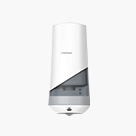
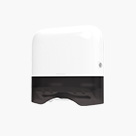

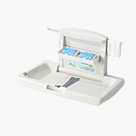


Interhasa Toilet Paper Dispenser E1008
Interhasa Toilet Paper Dispenser Model E1008, durable ABS construction with a compact design, perfect for commercial bathroom settings.
Explorar produtoMeet Us at 140th Canton Fair! Phase 1 Booth:3.1M31 I Phase 2 Booth:10.1 I33-34


Para um dispensador de toalhas de papel acessível segundo a ADA, a parte operada pelo usuário — como o sensor, a alavanca ou a saída de toalhas — deve geralmente estar entre 15 e 48 polegadas acima do piso acabado para um alcance desobstruído. O gabinete em si não é o ponto de medição. Bancadas, direção de aproximação e projeções do percurso de circulação podem alterar o layout em conformidade.
Em canteiros de obras de alto tráfego, até mesmo um pequeno erro de medição durante a fase de rough-in pode resultar em reprovação em inspeções e remediação cara de paredes. As Normas ADA para Design Acessível exigem que as partes operáveis permaneçam dentro de faixas de alcance específicas, ajudando a garantir commercial restrooms remain accessible to all users.
Establishing the correct ADA bathroom accessories heights requires more than just following a blueprint; it demands on-site verification of reach ranges and floor clearances. I also confirm dispenser dimensions after tile installation because finished floor height often changes from the original layout, potentially pushing a fixture out of compliance. Selecting a properly designed paper dispenser is the first step toward a functional, code-compliant environment.
The foundational standard for a forward approach requires the unit’s operable part to sit no lower than 15 inches and no higher than 48 inches above the finished floor. These measurements ensure that any user, including those in wheelchairs, can effectively access hygiene equipment without excessive leaning or stretching. This range is a strict technical limit designed to accommodate the maximum vertical reach range of a seated individual.
Não use uma única altura de montagem para todas as paredes. Primeiro identifique se o usuário se aproxima pela frente ou pela lateral, depois meça qualquer obstrução. Segundo as Normas ADA de 2010, um alcance superior desobstruído é de no máximo 48 polegadas. Um alcance frontal obstruído pode ser reduzido para 44 polegadas quando a obstrução tem mais de 20 e até 25 polegadas de profundidade. Um alcance lateral obstruído pode ser reduzido para 46 polegadas quando a profundidade de alcance excede 10 e é de até 24 polegadas. Confirme as condições completas na Seção 308.

| Condição de Instalação | Requisito | Ponto de Medição Correto | Erro Comum | Base Oficial |
|---|---|---|---|---|
| Alcance frontal desobstruído | Partes operáveis: 15–48 pol acima do piso acabado | Parte mais alta que o usuário deve operar, como um sensor, alavanca ou ponto de dispensação | Medir até o topo do gabinete ou usar a regra do porta-papel higiênico | ADA 2010 §308.2.1, 309.3 |
| Alcance frontal obstruído | Máximo de 48 pol quando a profundidade de alcance não é superior a 20 pol; máximo de 44 pol quando a profundidade é superior a 20 pol e não superior a 25 pol | Parte operável, medida com a profundidade da obstrução e a aproximação verificadas | Aplicar 48 pol sem verificar a bancada ou a profundidade da obstrução | ADA 2010 §308.2.2 |
| Alcance lateral desobstruído | Partes operáveis: 15–48 pol acima do piso acabado | Parte operável mais alta com uma aproximação lateral válida | Usar o antigo máximo de 54 pol | ADA 2010 §308.3.1, 309.3 |
| Alcance lateral obstruído | Máximo de 48 pol quando a profundidade de alcance não é superior a 10 pol; máximo de 46 pol quando a profundidade é superior a 10 pol e não superior a 24 pol, com a obstrução não mais alta que 34 pol | Parte operável mais altura e profundidade da obstrução | Verificar a altura, mas não as dimensões da obstrução | ADA 2010 §308.3.2 |
| Espaço livre no piso | Fornecer pelo menos 30 × 48 pol e posicioná-lo para a aproximação exigida | Área de piso acabado que atende ao dispensador | Permitir que lixeiras, portas ou outros acessórios bloqueiem a aproximação | ADA 2010 §305, 309.2 |
| Operação | Utilizável com uma mão, sem agarrar com força, beliscar ou torcer; força de ativação não superior a 5 lbf | Alavanca, manete, botão, sensor ou outro componente operável | Verificar apenas a altura de montagem | ADA 2010 §309.4 |
For coordinated accessible washrooms, the dispenser layout should be checked together with grab bars, door swings, lavatories and waste bins.
Operating Mechanism Requirements
Compliance extends beyond the mounting brackets; the internal mechanism must also meet strict ADA paper towel dispenser requirements. The unit must be operable with one hand and without any need for tight grasping, pinching, or twisting of the wrist. Many older, manual-crank dispensers fail this standard because they require significant manual dexterity to retrieve the paper.

A manual dispenser must require no more than 5 pounds of operating force. This limit ensures the fixture is usable by those with limited mobility, helping satisfy ADA manual dexterity requirements. I often recommend sensor-activated models for high-traffic zones because they eliminate physical force requirements entirely. Regular maintenance checkups are essential to ensure that manual pull-tension hasn’t increased due to mechanical wear or internal paper jams.
Interhasa Toilet Paper Dispenser Model E1008, durable ABS construction with a compact design, perfect for commercial bathroom settings.
Explorar produto
Even a perfectly mounted unit is non-compliant if a wheelchair user cannot physically maneuver into the correct ADA paper towel dispenser location. The floor area must be level and maintained without permanent or temporary obstructions that would prevent a forward or parallel approach to the fixture. Proper planning requires coordinating the placement of trash receptacles so they do not conflict with the clear access route.
The ADA requires a clear floor space of at least 30 inches by 48 inches centered on the dispenser. Guidance from ADA Compliance Inspections also highlights the importance of maintaining accessible paper towel dispensers within the required reach ranges to help avoid common compliance issues. One common field mistake is failing to account for the swing of the stall door, which can often encroach on this mandatory clearance footprint. I always recommend installers mark this 30×48 rectangle on the subfloor during the rough-in stage to verify that all subsequent partitions respect the accessibility boundary.
Mounting a dispenser over a vanity or a trash receptacle changes the user’s effective reach capability, requiring a lower installation point. This reach-over distance is a frequent failure point during final building commissioning if the contractor hasn’t accounted for the depth of the obstruction. As the depth of the counter increases, the maximum ADA toilet paper dispenser height must be adjusted downward to remain accessible.
When an obstruction is between 20 and 25 inches deep, the mounting height must be reduced to 44 inches for a forward reach. If the obstruction is less than 20 inches, the 48-inch limit remains the standard. Professional installers always double-check these depths during the rough-in stage because fixing an over-mounted dispenser after the tile is set is a costly process.
While federal rules provide the baseline, some states may have nuances regarding the placement of bathroom accessories near barras de apoio. These local regulations often focus on ensuring that one fixture does not block the safe use of another, particularly in critical safety areas like ADA-compliant stalls. It is vital to consult with a local inspector or a certified accessibility specialist to ensure the ADA toilet paper dispenser height complies with all applicable regional variations.
Dispensadores de toalhas de papel e dispensadores de papel higiênico não são tópicos intercambiáveis. Um dispensador de toalhas de papel próximo a um lavatório é avaliado principalmente por meio de disposições de rota acessível, alcance e operabilidade. Dispensadores de papel higiênico ao lado de um vaso sanitário também têm requisitos de localização vinculados ao vaso sanitário e às barras de apoio. Mantenha o nome do produto, o diagrama e a seção citada consistentes em toda a página.
Even when the mounting height is correct, dispensers may still fail ADA inspections because of:
Checking these items before final inspection can help contractors avoid costly rework and project delays.
| Installation Scenario | Recommended Height |
|---|---|
| Standard wall installation | 42–48 in |
| Above a countertop (<20 in deep) | Up to 48 in |
| Above a countertop (20–25 in deep) | Max. 44 in |
| Accessible restroom | 42–44 in preferred |
| High-traffic commercial restroom | 42–48 in |
Although ADA allows a maximum height of 48 inches in most cases, many commercial restroom designers install dispensers at 42–44 inches to provide easier access for a wider range of users.
Meça até a parte operável mais alta — o sensor, alavanca, manete ou ponto de dispensação de toalhas que o usuário deve alcançar — não automaticamente até o topo do gabinete. Confirme a direção de aproximação, a profundidade da obstrução e a elevação do piso acabado no desenho do projeto.
As equipes de projeto podem comparar dimensões de gabinetes e formatos de dispensação na linha de dispensadores de papel Interhasa antes de aprovar o desenho de rough-in.
Solicite dimensões do dispensador de papel, gabaritos de montagem e uma cotação de projeto.
Ver mais →Mastering the ADA toilet paper dispenser height and reach ranges is a hallmark of professional facility management and quality construction. By integrating these technical standards into the early design and rough-in phases, you ensure a restroom environment that is both legally compliant and operationally efficient. This attention to detail reduces the risk of litigation and ensures that every patron can use the facility with dignity. For high-performance, code-compliant solutions, choose an Interhasa paper dispenser.

The standard paper towel dispenser height from floor is 42 to 48 inches to the highest operable part, ensuring compliance with the 48-inch federal maximum reach limit.
If the counter or obstruction is between 20 and 25 inches deep, the mounting height must be lowered to a maximum of 44 inches to remain compliant with forward-reach standards.
Yes, whether manual or touch-free, the sensor or dispensing point must be within the 15-to-48-inch reach range and have the required clear floor space.