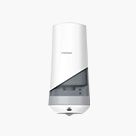



موزع الصابون الأوتوماتيكي من إنترهاسا F9309
• Voltage: DC6V / AC100~240V
• Rated Power: ≤20W
Meet Us at 140th Canton Fair! Phase 1 Booth:3.1M31 I Phase 2 Booth:10.1 I33-34

Choose a foaming soap dispenser by matching reservoir capacity to washroom traffic, mounting style to basin layout, and sensor or manual operation to maintenance routines. Test the approved soap, dose consistency, refill access, and power arrangement before ordering in quantity.
F9303 is the desk model that accommodates 300 ml and works well on the counter surface, whereas F9309 is the wall model that holds 1,000 ml and is designed for high-use washrooms. Consider both configurations with regard to available space, refilling frequency, accessibility to electricity and cleaning routine to choose a dispenser. Make sure you are using the right configuration with proper soap from your vendor; there are various possibilities for Interhasa products for different facilities.
First, consider what type of facility it is and how many visitors it receives as well as the cleaning schedule at hand. Identify who monitors and refills the dispensers on the weekends and during night shifts.
Calculate the demand based on observations. Insufficient models will be empty until the next refill while excess reservoir size would increase the weight without any reason in low traffic washrooms. If there is no data on previous experience, calculate refill frequency and the number of occasions when it was empty as well as peak time.
Additionally, take into consideration the maximum occupancy, the number of dispensers and the presence of extra stock.
Select a reservoir that covers use between checks, with reserve for peak periods. Compare usable volume, refill opening, container removal, closure security, and soap visibility.

ال 9305 model is listed at 1,000 ml and supports liquid, spray, or foam output. Confirm the required mode and quoted configuration with the supplier.
Wall-mounted units free counter space, but check wall strength, fixings, pipework, and refill clearance before drilling.
Countertop units avoid drilling but occupy surface space and may shift during cleaning. Deck-mounted units need compatible openings and under-deck clearance. For U.S. projects, consult the 2010 ADA Standards for Accessible Design for reach and operable-part requirements.
Sensor models reduce actuator contact but require power, alignment, and troubleshooting. Manual units need no electrical supply, but their mechanisms must withstand repeated use and cleaning.
Automatic operation is not always the better choice. Test for false or missed activations under actual lighting and basin conditions, especially near reflective surfaces or crowded traffic. Check detection range, delay, and reliability from different approach angles.
Foam systems need a compatible pump and formulation. Unapproved soap may cause weak foam or blockages; test repeated activations for leaks, sputtering, delays, and dose variation.

If performance drops, inspect the refill, nozzle, pump, air path, and power before replacing the unit. Testing the foaming soap dispenser with the intended soap before installation can expose compatibility problems early. Ask the supplier for written soap guidance rather than assuming any liquid hand soap will work in a foaming mechanism.
Check power, voltage, instructions, and spare-part availability. The F9309 listing specifies a 1,000 ml ABS unit with foam output and DC 6 V / AC 100–240 V options; confirm the quoted configuration and accessories.
Choose materials suited to moisture, chemicals, and impact risk. Ensure staff can refill, clean the nozzle, replace batteries, and access parts easily.
Before approving a foaming soap dispenser, test the intended soap, mounting, and power arrangement.
| تحقق | What to verify | Why it matters |
|---|---|---|
| Foam and dose | Consistent output over repeated activations | Controls waste and output quality |
| Refill access | Secure closure and easy filling | Reduces spills and service time |
| Mounting | Firm fixing and adequate clearance | Prevents rework |
| Activation | Reliable sensor or manual response | Identifies missed doses or false triggers |
| صيانة | Cleaning access and spare parts | Limits downtime |
For multi-site orders, request a sample, technical sheet, soap guidance, warranty, and spare-parts list. If sourcing a foam dispenser bottle wholesale, confirm continuing availability of replacement containers and pumps before standardizing the specification.
• Voltage: DC6V / AC100~240V
• Rated Power: ≤20W

Choose a foaming soap dispenser based on traffic, refill frequency, installation limits, soap compatibility, and service access. Prioritize reliability and maintenance over unnecessary features.
Compare the Interhasa soap-dispenser range against the site specification and parts plan. If using bulk foaming hand soap, verify formulation compatibility and dose consistency before approving the final order.
A manual unit uses a push mechanism, while an automatic model activates through a sensor and typically requires power. Choose according to traffic, maintenance capacity, and site conditions.
Check soap compatibility, refill level, nozzle, pump, air path, and power supply before deciding whether the unit needs repair or replacement.
Position it within comfortable reach near the basin, allow sufficient refill and cleaning clearance, and follow applicable accessibility requirements and the manufacturer’s mounting instructions.