
Meet Us at 140th Canton Fair! Phase 1 Booth:3.1M31 I Phase 2 Booth:10.1 I33-34

×

Paper Towel Dispenser Not Dispensing? 6 Fixes Buyers Should Check

نوفمبر 11, 2026

Quick Answer:

A paper towel dispenser usually stops dispensing because the refill is the wrong size or format, the paper is loaded in the wrong direction, the stack or roll is overfilled or damp, or the outlet, lock or mounting is interfering with the feed.

This guide gives distributors, facilities teams and procurement managers a practical order of checks. You will learn how to confirm the refill specification, spot a reversed feed path, judge overfilling and moisture, inspect the mechanism only where the model has one, check the lock, outlet and mounting, and decide when to replace a part. The aim is to fix the jam and remove its cause.

What Should You Check First When a Paper Towel Dispenser Stops Dispensing?

Confirm whether the unit is manual or powered. Isolate the power supply before opening any powered dispenser, and follow the model-specific manual for shutdown, opening, cleaning and part replacement. Do not bypass a safety interlock, probe live components or attempt electrical repair unless you are qualified and the manual covers it.

Ask three questions: When did it last work? What changed? Is the fault on one unit or several? A new refill batch, cleaner or humid spell can point to the cause. If several dispensers failed after the same delivery, suspect the paper before the hardware.

Remove visible torn paper gently. Do not pry it out with a tool; you may scratch the feed surface or damage a roller. Keep the removed sheet and packaging for identification, then work through the checks one at a time. The Interhasa FAQ page covers general questions; keep model-specific faults in your service record.

Is the Refill the Right Size, Format and Core Diameter?

Bathroom counter with a faucet, plant and three paper towel formats labeled Format, Size and Core beneath the heading Check the Refill First.

Match the paper format first. A folded hand towel, a roll towel and a center-pull roll are different refill families and do not interchange just because the cabinet looks similar. The guide to paper towel types helps you name the refill correctly before comparing models.

For folded paper, measure sheet length, sheet width, fold height and full stack depth. Fold height is the distance between folds, not the thickness of one sheet. A stack that is slightly too tall can press against the lid, tear at the perforation or stop the next towel from separating. For rolls, measure roll width, outer diameter and core diameter. Core diameter is the hole through the center, not the outside of the roll.

Do not treat “universal” as a fit statement. It usually means the refill suits a group of common dispensers, not every model. Compare the measured refill with the dispenser drawing or a physical sample. The paper towel size guide explains the dimensions buyers most often confuse.

ال E51016 center-pull dispenser shows why the refill and cabinet must be checked together. Its page states ABS construction, a 256 × 256 × 159 mm product size and a center-pull big-roll design. Confirm roll width, diameter, core and paper weight against the current drawing. The paper dispenser category lists other formats if your stocked refill does not suit the cabinet.

Is the Paper Loaded in the Right Direction and Feed Path?

White wall-mounted paper towel dispenser above a sink and counter with a folded stack of towels, showing the headline Trace the Simple Checks and three circles labeled Load direction, Paper level and Outlet.

Loading direction is the most common avoidable fault. Paper must leave the pack or roll in the direction shown on the instruction label, pass the first guide or roller on the correct side and exit through the outlet without twisting. A backward tail may feed nothing, feed several sheets at once or pull the stack inside.

Trace the paper path by hand. Look for torn corners, packaging adhesive, paper dust, rough moulding edges or a label stuck inside the cabinet. A small piece of tape can hold the paper long enough to tear it on every pull. Check that the paper is centered rather than rubbing one side wall. On a roll, confirm that it turns freely and the paper is not caught under itself.

ال roll versus folded dispenser comparison explains how the loading patterns differ. Use the model’s diagram rather than copying a nearby dispenser. If it is missing, request the manual and keep a laminated copy inside the cabinet.

Is the Dispenser Overfilled, Damp or Compressed?

More paper is not always better. Overfilling compresses a folded stack, puts pressure on the lid and changes the angle at which the first sheet leaves the outlet. Staff may add a partial pack to avoid a return trip, then force the door closed. The unit looks full but cannot separate paper cleanly.

Respect the fill line or loading instruction. If there is no visible line, load the unit as the manual shows and check that the lid closes without force. Do not store refills in a damp cupboard, near a sink or against a cold wall where condensation forms. Paper absorbs moisture, swells and loses stiffness; damp towels tear, curl and cling to the feed path. Rotate stock and keep spare refills in their original packaging.

Liquid left on the outlet or inside the cabinet can also transfer to the paper. Wipe surfaces dry after cleaning and let the unit dry before reloading. If one washroom repeatedly has damp paper, inspect ventilation and cleaning practice.

Does Your Model Have a Roller, Feed Mechanism or Sensor Worth Checking?

Only check the mechanism your model actually has. A manual folded-tissue dispenser may have a tension flap, roller or outlet guard. A center-pull or automatic model may have a roller, motor, battery pack, sensor or control module. Do not assume every model has a sensor.

For a powered model, isolate the power first and follow the manual. Remove paper dust and packaging debris from the accessible feed area. If there is a sensor window, clean it as the manual specifies; dust, soap residue or a sticker can block the lens. Check the battery and any error indicator. If the unit still fails after those user-serviceable checks, stop. Do not open the gearbox, bypass the sensor or test the motor with improvised wiring. Ask the supplier for the service procedure or a replacement module.

Record the model number, batch information and exact symptom. “Motor runs but no paper advances” is more useful than “does not dispense.” That helps identify whether the fault is in the feed path, drive or control.

Are the Lock, Outlet or Mounting Interfering With Dispensing?

A lock that is not fully engaged can hold the door slightly open, misalign the outlet and change the pressure on the paper. Check the latch, hinge and key. If the key is broken or the latch is bent, replace the part rather than forcing the door. Train staff on the opening method and keep a working key.

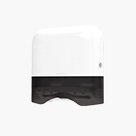
Inspect the outlet for bends, sharp edges, missing guards or paper build-up. The E6002 square tissue dispenser page states ABS construction, a 298 × 130 × 95 mm product size, a bent outlet, a chrome decoration bar and press-or-key unlocking. Confirm refill and outlet clearance for the exact unit.

Mounting problems are easy to miss. A loose bracket, uneven wall or twisted cabinet can make the door bind and the paper rub on one side. Re-level the unit and secure the anchors as the installation instructions require. If the model offers a non-drill option, confirm the wall substrate and accessory suit the load. Keep the outlet clear of shelves and bins.

When Should You Replace a Part Instead of Adjusting the Dispenser?

Replace a part when the same fault returns with a verified refill and correct loading. Common candidates include a cracked housing, a worn roller, a broken latch, a damaged outlet, a corroded hinge or a failed sensor or drive module. A cracked cabinet flexes as the door closes and changes the feed angle.

Get the model identity, exploded diagram and part list before ordering. Confirm the part suits the current production version, because a similar cabinet may use a different latch or roller. Compare repair with replacement using documented costs: part price, freight, technician time and downtime. Use your own service records rather than a generic savings figure.

If parts are unavailable or the housing is beyond economic repair, specify a new dispenser against the refill you intend to use. Send the measured dimensions, a sample and the daily traffic pattern. This is also the point to confirm market documentation. Interhasa holds CE and RoHS documentation for paper towel dispensers, but the applicable file and model scope should still be confirmed for the exact SKU and order.

How Do You Prevent the Same Dispensing Fault From Returning?

Put a laminated loading diagram inside the cabinet and a refill specification card in the cleaning cupboard. The card should show format, sheet or roll dimensions, core diameter and the approved item code. Staff should not substitute a different pack because it fits the shelf.

Check the outlet, feed path and paper level at each refill, and record jams by location, model and refill batch. A pattern across several units points to paper or training; a single repeat fault points to a damaged part. For distributors, include loading instructions and the refill specification in the resale pack so buyers can match replacements correctly.

موزع مناديل مربع من إنترهاسا E6002

Interhasa 6002 tissue box, a bend tissue outlet , make the tissue box match your usage habbit ,with chrome decoration bar to make the tissue box luxury feeling. Press or key two unlock way, make you convienient in usage.

استكشاف المنتج
موزع مناديل مربع من إنترهاسا E6002

الأسئلة الشائعة

Why does my paper towel dispenser jam right after refilling? Likely causes are reversed paper, an overfilled stack, the wrong fold height or core diameter, or packaging in the feed path. Compare the refill with the specification and reload it as the diagram shows.

Can I use any roll if the width fits? No. Roll width is only one dimension. Check the outer diameter, core diameter, paper weight and space around the roll. An oversized roll may rub the cabinet; an undersized core may bind. Confirm the combination with the supplier.

How do I know whether the sensor is faulty? Confirm the model has a sensor. Clean the window as the manual directs, check power or battery and look for its error indication. If it still fails, request service information; do not bypass the sensor or test wiring.

Is it better to repair or replace a failing dispenser? Repair is reasonable when the part is available, the housing is sound and the fault is clearly identified. Replace the unit when the cabinet is cracked, the mechanism is obsolete or repeated repairs cost more than a documented replacement. Use your own service records.

الخلاصة

Work in order: confirm the refill, check loading and feed path, reduce overfilling and moisture, inspect only the mechanism your model has, then check the lock, outlet and mounting. Replace a part when the same fault survives those checks. Isolate power before opening a powered unit and follow the model manual.

Interhasa self-produces paper towel dispensers and can review your refill sample. Standard orders have no general MOQ; custom packaging has its own MOQ. Orders above USD 8,000 qualify for free FOB Ningbo. Send refill dimensions, photos, target market and order details through the صفحة الاتصال so fit and documents can be checked.

احصل على عرض أسعار
يبحث
كن شريكًا مع خبراء مجفف اليد.

باعتبارنا شركة مصنعة معتمدة، فإننا نقدم أسعارًا تنافسية بالجملة وحلولًا مخصصة لعلامتك التجارية.