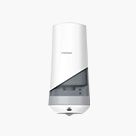



Interhasa Seifenspender 9305
Voltage: DC6V / AC100~240V
Rated Power: ≤20W
Fassungsvermögen: 1000 ml
Meet Us at 140th Canton Fair! Phase 1 Booth:3.1M31 I Phase 2 Booth:10.1 I33-34

Bulk soap dispenser is more recommended for commercial bathrooms where there is a need for flexible soap sourcing and lower packaging cost, while the cartridge type is more suitable for those bathrooms where there is a need for quick and easy refilling. The choice of the dispenser type depends on the total cost of refilling, hygiene, staffing, and compatibility with soap.
Bulk dispensers are ideal for places that have established cleaning and refilling processes, whereas sealed cartridges might help streamline changes, decrease handling, and enable regular service. Prior to selecting a dispenser system, take into consideration maintenance procedures, ease of refills, and the chances of loading the wrong soap. As an example of a bulk-filler machine, Interhasa’s 9305 model features a 1,000 ml capacity with the possibility to dispense liquid, sprays, and foam, while the 7002 model is a manual 800 ml dispenser used for liquid soap and gel.
In a bulk-fill dispenser, soap is held in a tank that will be refilled by employees using the large storage container, while the cartridge dispenser utilizes removable cartridges that fit into a dispenser. The type of refilling system plays a role in how much staff is required for the process, what storage options there are, how much packaging will be thrown out, and what suppliers can be used.
Prior to the installation process, ensure that the wall surface, the height of mounting, the service clearance, and the required access for regular refills have been verified. During the commissioning process, ensure the testing of the dispenser using the designated soap and the verification of the mounting and the leakage, along with replacement parts availability.

For a bulk soap dispenser, compare cost per usable dose rather than container price alone. Include packaging, freight, storage, labor, spillage, and unused soap; a low refill price may not mean lower operating cost.
A commercial soap dispenser refill plan also depends on reliable supply. Bulk purchasing offers flexibility, while proprietary cartridges can increase supplier dependence; check lead times, minimum orders, and approved alternatives before standardizing.
Open refill systems require careful handling because contaminated containers, funnels, or partially empty reservoirs can introduce bacteria. The CDC’s clinical hand-hygiene guidance advises against topping off partially empty soap dispensers because the practice has been associated with bacterial outbreaks.
Follow the manufacturer’s procedure to empty, clean, dry, inspect, and refill each unit. A refillable soap dispenser should not be topped off simply to save time; where staff cannot consistently complete sanitation steps, a sealed system may be more practical.
Soap viscosity and pump design affect dose size, flow, and reliability. An incompatible formulation may cause slow dispensing, dripping, clogging, or poor pump recovery even when the reservoir is full.
A bulk foam soap dispenser requires a compatible foaming formulation and dispensing mechanism; ordinary liquid soap is not automatically interchangeable. At commissioning, prime the pump, test doses, check leaks, and confirm secure mounting.
Bulk refilling requires careful pouring, spill control, and reservoir cleaning. Cartridge changes reduce pouring, but staff must seat replacements correctly and dispose of empty packs per site procedures.
For troubleshooting, confirm the container is seated, the nozzle is clear, the pump is primed, and the soap matches the specification. Never force a blockage or mix leftover soap with a new formulation; both can conceal recurring faults.

| Facility condition | Likely fit | Main consideration |
|---|---|---|
| Trained staff and centralized stock | Bulk-fill | Packaging cost and sanitation control |
| Limited time for restroom servicing | Cartridge | Faster replenishment |
| Strict refill-handling requirements | Sealed cartridge | Less direct soap handling |
| Multiple sites with variable supply | Depends on supply and compatibility | Availability and standardization |
In busy hotels and public facilities, empty dispensers trigger complaints and extra housekeeping rounds. Cartridges may suit locations where controlled replenishment outweighs packaging costs, while a managed bulk system can work when cleaning procedures and stock monitoring are dependable.
Test samples using the exact soap intended for daily operation, not just water or a supplier’s demonstration liquid. Check dose consistency, leakage, pump recovery, refill access, lock security, mounting strength, and whether staff can service the unit without removing it from the wall.
Calculate cost per dose and record refill time over several cycles. Assess bulk fill soap dispenser capacity and whether a bulk soap dispenser can be serviced efficiently, alongside replacement pump availability, cartridge lead times, cleaning requirements, warranty terms, and installation instructions.
Voltage: DC6V / AC100~240V
Rated Power: ≤20W
Fassungsvermögen: 1000 ml

Choose the system that matches the facility’s servicing capacity, hygiene controls, and supply arrangements—not simply the lowest refill price. A bulk soap dispenser can suit teams with reliable sanitation procedures, while cartridges can simplify handling where labor time is limited.
Document the approved soap, cleaning procedure, inspection frequency, and spare-parts plan so every shift follows the same process. Review the Interhasa soap-dispenser range against site requirements before finalizing a specification that supports consistent dispensing and efficient maintenance.
Bulk-fill units are replenished by pouring soap into a reservoir, while cartridge systems use replaceable containers that connect to compatible dispensing mechanisms.
Check the soap level, container connection, nozzle, pump priming, and formulation compatibility. Follow the manufacturer’s troubleshooting procedure before disassembling the mechanism.
Verify mounting height, wall substrate, fixing method, service clearance, refill access, and soap compatibility. Test the installed unit with the specified product and confirm consistent dispensing before handover.