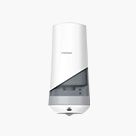
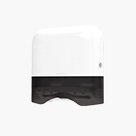



Secador de mãos de aço inoxidável
Corpo em aço inoxidável durável com design elegante para uso comercial pesado.
Explorar produtoMeet Us at 140th Canton Fair! Phase 1 Booth:3.1M31 I Phase 2 Booth:10.1 I33-34

Commercial Hand Dryer submittals should indicate electrical compatibility, drying effectiveness, noise, housing, protection level, clearances, and accessibility for servicing. Lack of information may lead to approval delays or changes after rough-in.
Published specifications will provide for a capacity of 1,050 W, AC 110/220V at 50/60 Hz, protection rating of IPX1 and dimensions of 284 × 331 × 186 mm; confirm the precise model and current literature according to Model 3890/3862 specifications. Compare the published specifications to assess the electrical compatibility and installation drawing; thereafter cross-check the provided model’s specifications with Interhasa.
Document peak hour traffic, simultaneous usage, accessibility considerations, wall space availability, and cleaning schedule. Determine the appropriate number and location of dryers needed to satisfy high volume traffic without queue formation at entry points and at wash sinks.
During the site survey, verify the wall strength, finished floor elevation, and mounting location from the project drawing. Confirm accessibility clearance requirements, electrical access, and maintenance clearance prior to layout to prevent relocation, rewiring, and wall damage during installation.

It is necessary to check the label for the voltage that the device uses, frequency, power consumption, current and class of electrical protection. Hand dryers need to be in harmony with the electricity available at the premises, and a rating of 110/220 V doesn’t necessarily mean that this is how the wiring will be for the ordered one.
The electrical contractor should verify circuit capacity, overcurrent protection, earthing or double insulation, isolation, and local code. Use rated current and manufacturer instructions—not wattage alone—to plan the circuit. A mismatch can cause tripping or failed inspection, so confirm hand dryer voltage before procurement.
Compare performance claims only when test conditions are comparable. Air speed and advertised drying time do not independently predict restroom throughput; airflow pattern, sensor response, and user behavior also affect results.
Choose a commercial hand dryer by checking the stated drying-time method, motor type, and duty cycle. Evaluate the unit’s hand dryer wattage alongside its drying performance, since higher power consumption alone does not guarantee faster drying or better energy efficiency.
Check sound rating and measurement distance in noise-sensitive spaces. Decibel figures from different test conditions are not directly comparable, so request the test method.
Estimate energy use from rated power, activations, and run time, not broad “energy-saving” claims. Dust, humidity, and cleaning chemicals can increase maintenance needs; confirm the operating environment and cleaning instructions.
Choose housing based on traffic, cleaning method, impact risk, and repairability. Compare the grade and finish; stainless steel may suit demanding public areas, while polymer may suit other approved applications.
Compare hand dryer dimensions with the project elevations and required accessibility clearances, then verify that the IP rating is suitable for the intended installation environment. IPX1 covers vertically falling water drops under defined test conditions, not hose-down cleaning. Verify hand dryer installation requirements against approved drawings before drilling or wiring. For a stainless-steel option, review the Model 3897 stainless-steel hand dryer for its listed configuration and dimensions.
A filter is a maintenance component, not proof that discharged air is sterile. Confirm its type, replacement part, service interval, and access method; a blocked intake or overdue filter can reduce airflow.
If airflow is weak while the motor runs, check the intake and filter according to the manual. If cleaning fails, isolate power and use the manufacturer’s service procedure; never open live electrical components.
A hand dryer submittal should identify the exact model and finish, dimensional drawing, mounting template, voltage, frequency, rated power and current, protection class, IP rating, noise and drying data, wiring diagram, manual, warranty, spare-parts details, and required certificates or test reports.
Match the model to the schedule, electrical data to site supply, and dimensions to elevations. Assign responsibility for wall reinforcement, circuit provision, connection, and commissioning; record existing holes and cable entry on replacements.

A reliable commercial hand dryer selection starts with restroom demand and ends with documented commissioning. Verify electrical supply, clearances, performance evidence, protection rating, and service access before installation to reduce substitutions, failed checks, and downtime.
Check the applicable edition and product-specific requirements rather than treating one general standard as complete approval. The IEC 60335-1 safety standard covers general safety requirements for household and similar electrical appliances; particular standards and local rules may also apply. For model options, consult a professional hand-dryer manufacturer.
Corpo em aço inoxidável durável com design elegante para uso comercial pesado.
Explorar produto
Include the model, electrical data, dimensions, performance, noise, protection rating, mounting requirements, maintenance information, and required approval documents.
Check the intake for obstruction and inspect the filter according to the manual. If airflow remains weak after routine cleaning, isolate power and arrange qualified service.
Confirm the approved model, supply voltage and frequency, circuit protection, wall support, mounting height, clearances, and maintenance access before drilling or connecting power.