


Stainless Steel Hand Dryer
Durable SS body with sleek design for heavy-duty commercial use.
Explore ProductMeet Us at 139th Canton Fair! Phase 1 Booth: 3.1L38 | Phase 2 Booth: 10.1i33-34

Most commercial hand dryers are offered for 110–120V or 220–240V supplies, while some North American building applications use 208V or 277V models. These are product options, not interchangeable connections. Confirm the exact nameplate voltage, frequency, rated current, wiring diagram and branch-circuit instructions before ordering or installation.
The electrical setup depends on the hand dryer model. High-speed dryers usually need a dedicated 20-amp circuit, whereas basic models work with 15-amp circuits. For a project quotation, specify destination country, supply voltage and frequency, hardwired or plug-in connection, heater on/off requirement, quantity, applicable certification and expected daily cycles. Our engineering team can then match the motor, heating configuration and documentation to the market.
If you’re sourcing for a project, explore our hand dryer manufacturing solutions.
Here’s a closer look at the different requirements of hand dryers:
While most hand dryers operate at 110-120V or 208-240V, some ss industrial dryers may run on 277V in large commercial buildings.
Durable SS body with sleek design for heavy-duty commercial use.
Explore Product
How much power a hand dryer pulls depends on its wattage and voltage.
Calculated current is watts ÷ volts, but branch-circuit sizing cannot be confirmed from this calculation alone. Follow the product nameplate, installation manual, conductor rules, load classification and local electrical code; use a licensed electrician where required.
Dividing watts by volts provides an estimated operating current, but it does not determine the final breaker or conductor size. Heating configuration, manufacturer instructions, applicable load rules, conductor temperature rating, voltage drop, grouping and local code all matter. The project electrician should approve the circuit using the selected model’s documentation.
If you want something more efficient, look for a dryer with a power factor of 0.9 or higher—that means less wasted electricity. For retrofit projects, calculate operating cost together with circuit capacity before approving a model.
A commercial hand dryer should be on its own circuit. This means:
Manufacturers also recommend using a GFCI outlet when installing hand dryers near water sources for added safety.

Visit Our Product Page Now!
Proper wiring keeps hand dryers running smoothly and prevents electrical overload. General wiring needs include:
Using the correct wire size prevents overheating and ensures a steady power supply.
Public restrooms need to follow ADA hand dryer requirements to make them accessible for everyone. The key rules are that the bottom of the dryer should be no more than 48 inches from the floor so people in wheelchairs can reach it.
If the dryer sticks out more than 4 inches, it must be recessed into the wall to avoid blocking walkways. Follow these guidelines to keep your restroom compliant and user-friendly.
Hand dryers are given IP (Ingress Protection) ratings to indicate how well they handle water exposure:
If the dryer will be near sinks or high-moisture areas, an IPX4-rated model is the safer choice.
Modern energy-efficient hand dryers help cut electricity costs. Features that improve efficiency include:
All hand dryer installations should follow National Electrical Code (NEC) commercial hand dryer requirements. Some states or cities may have additional codes. Before installation, check whether a licensed electrician is required for commercial setups.
Additionally, see if the voltage and amp rating match local regulations and whether you need to buy extra disconnect switches for maintenance. Failure to follow local codes could result in failed inspections or safety risks.

Solve Your Challenges – Request More Info!
Some hand dryers include heating elements, while others rely on high-speed air alone:
A complete hand-dryer RFQ should state destination country, site voltage and frequency, quantity, daily traffic, heated or unheated mode, hardwired or plug-in connection, housing material, required certificates, label language and spare-parts expectations. This allows our engineering team to quote a configuration that can be sampled and tested before mass production.
| RFQ Field | Why It is Required | Buyer Provides | Manufacturer Confirms |
|---|---|---|---|
| Destination market and project location | Electrical rules, certification and connection practice vary by market | Country, city and project type | Available compliant configuration and documentation scope |
| Site supply | Prevents selecting an incompatible electrical version | Measured or specified voltage, frequency and phase | Model rating and permitted supply range |
| Expected traffic | Duty pattern affects product and project selection | Estimated daily uses and peak-period demand | Suitable platform, thermal control and test evidence |
| Heater requirement | Heated, switchable or heater-off operation changes load and user experience | Required operating mode and energy objective | Available heater configuration and rated input |
| Connection method | Plug, cord and hardwired products require different coordination | Preferred plug/cord or hardwired connection | Approved connection option and installation instructions |
| Installation environment | Moisture exposure and mounting conditions affect suitability | Room type, splash risk and mounting surface | Declared ingress rating and installation limitations |
| Compliance documents | Project approval depends on the correct model and market scope | Required standards, reports and language | Certificate/report number, issuing body and covered model |
| OEM details | Branding changes must not invalidate approved construction or labels | Logo, color, label, packaging and manual requirements | Feasible customization, approval sample and change-control process |
To ensure safe and efficient operation, follow these installation tips:

Routine maintenance extends the life of a hand dryer. Basic upkeep includes:
Skipping maintenance can lead to overheating, weaker airflow, or sensor failures.
If you’re setting up a hand dryer, getting the electrical part right is key. Whether it’s for a small restroom or a high-traffic spot like an airport, making sure it’s wired properly, has the right voltage, and meets safety standards will help it run smoothly and last longer.
It also helps to choose a dryer that’s built for the job. Some models are better for low-traffic areas, while others are designed to handle constant use without overheating or wearing out too fast. Features like energy efficiency, durability, and hygiene filters make a big difference in performance.
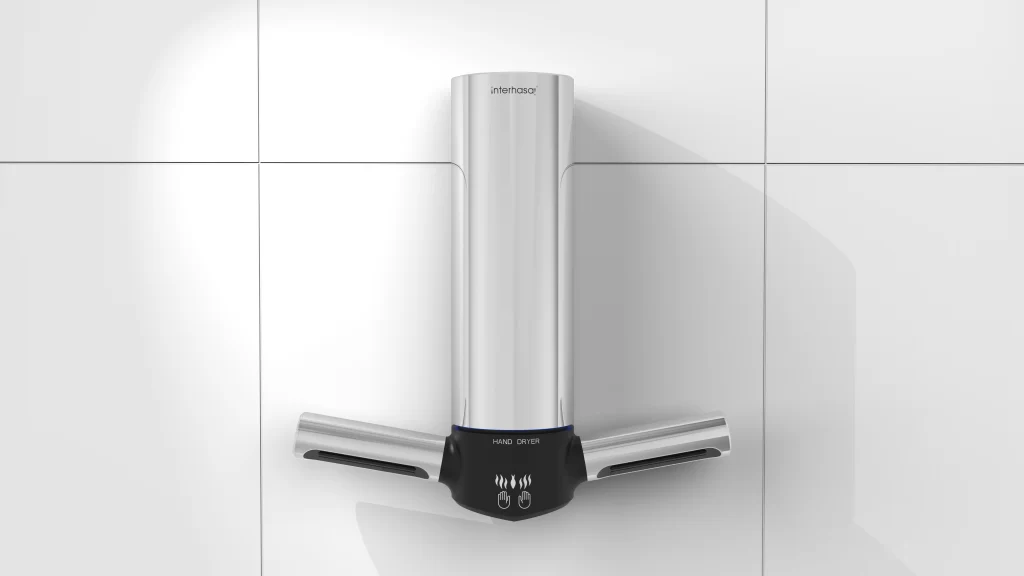
That’s what we focus on at Interhasa—designing hand dryers that aren’t just fast and efficient but also built to handle real-world use. Take our Model 3897 SS Steel Hand Dryer, for example. It runs on 110-240V, has a HEPA filter for cleaner airflow, and comes in a tough stainless steel shell that holds up in busy spaces.If you’re looking for a reliable, high-performance hand dryer for your business, explore our range at Interhasa.net.