


Interhasa Hand Dryer 1688
Compact and stylish hand dryer with fast-drying performance for daily use.
Explore ProductMeet Us at 140th Canton Fair! Phase 1 Booth:3.1M31 I Phase 2 Booth:10.1 I33-34

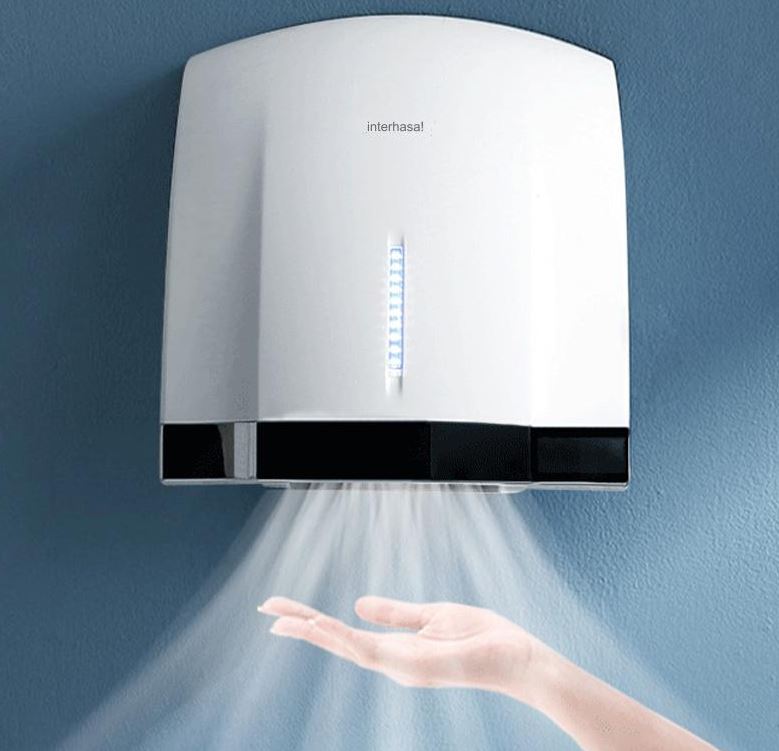
Whenever you need to install hand dryers for the establishment you own – such as malls, schools, airports, and the like – it is important that you know exactly the right type of hand dryer. Not just any hand dryer, but the commercial type. Commercial hand dryers have features that can accommodate a large number of people using them daily.
However, hand dryers are not just one kind. There are different types of hand dryers depending on how you intend people to use them.
Commercial hand dryers are commonly grouped by hand position—hands-under and hands-in—and by drying technology, such as high-speed or traditional warm-air models. Buyers should compare drying time, traffic capacity, water management, noise, power, maintenance and accessibility rather than choose by shape alone.
This guide from Interhasa will discuss what these types of hand dryers are. In summary, they are your:
While there are three major types of hand dryers in today’s industry, remember that they are not restricted to this list alone.
Add a comparison table with rows for hands-under, hands-in and blade-style units, and columns for typical traffic, dry time, floor-water control, cleaning workload, protrusion/ADA considerations, housing material, noise and target project. But, here they are:
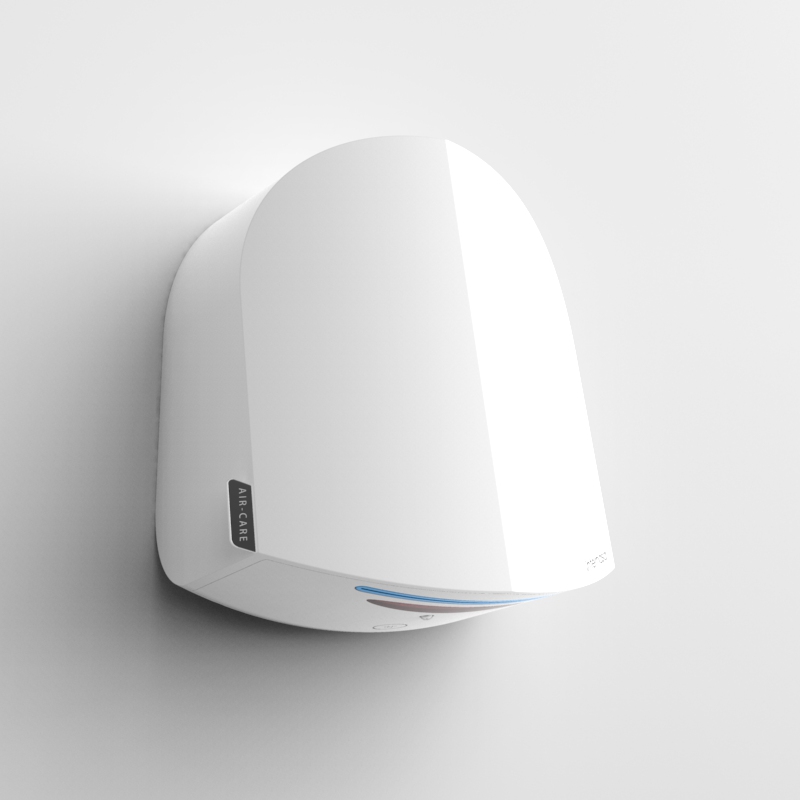
The hands-under hand dryer is the most common among all types of hand dryers. The modern-day hands-under hand dryers do not require you to press a button, unlike those from decades ago. Simply hover your hand in the space under where the warm, speedy air comes from, or the air nozzle, to activate it. This is a key part of how touchless technology is changing public restroom hygiene.
Most hands-under hand dryers, if not all, fire air in a downward direction, helping chase away those drops of water before you head out of the bathroom.
A pro tip for shoppers or travelers: Avoid rubbing your hands together under this dryer for the spread of bacteria may quicken up. So, keep your hands apart.
Compact and stylish hand dryer with fast-drying performance for daily use.
Explore Product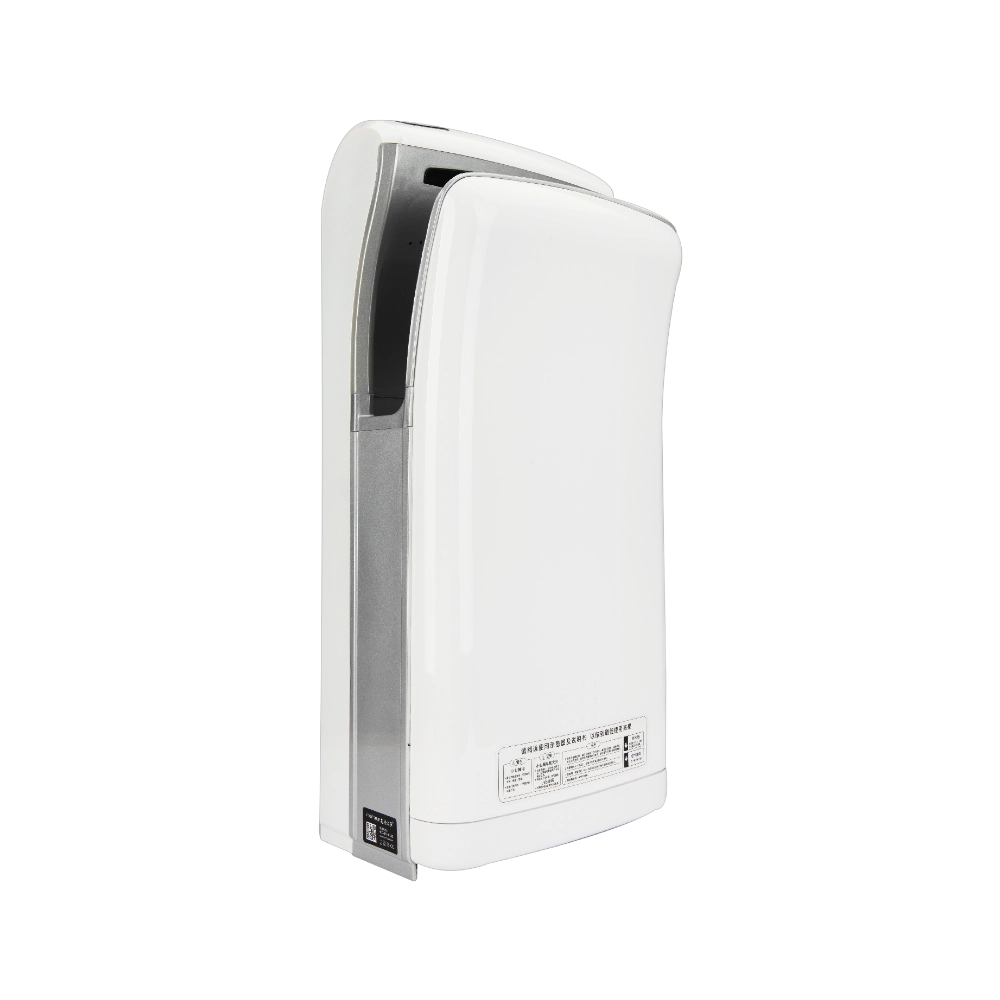
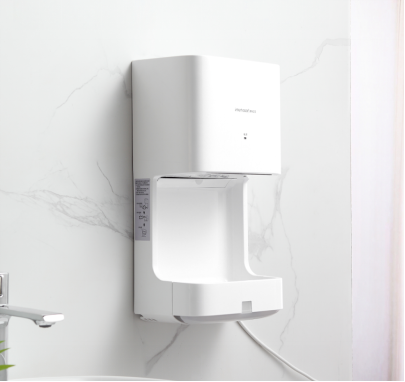
Hands-in dryers differ in design from the first on this list. They’re usually shaped like two airplane seats in a row. Its design is unconventional so some people find it uneasy and uncomfortable to use them.
However, hands-in dryers are some of the easiest to use, as well as some of the most efficient on the market.
Instead of air coming from above, this hand dryer fires air jets from both directions, as you place your hand like a sandwich spread midway between the bread’s faces. Sensor quantity and detection pattern vary by model. Review the activation zone, hand movement instructions and false-trigger testing in the technical sheet instead of assuming all hands-in dryers use one sensor.
Also, a hands-in dryer is installed below waist level, so you are not raising your arms a bit, but drying your hands more comfortably. Some units also have lights and countdown timers which let you know when you should withdraw your hands.
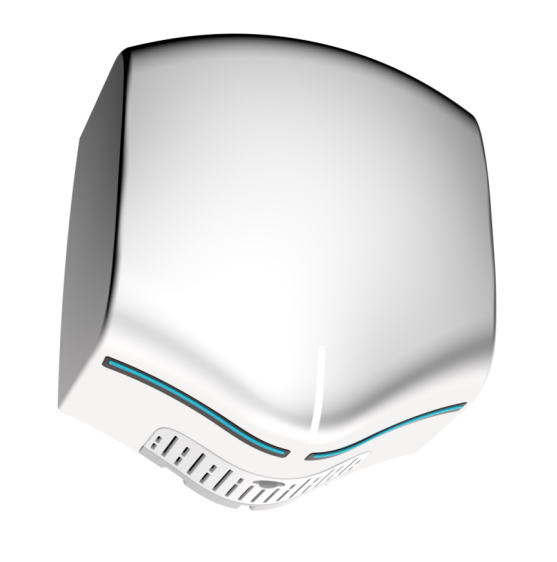
The last type of hand dryer is the V-bladed one. It isn’t commonly seen around, perhaps because of its too unique design. The air jets here look like they point outwards, so businesses think twice about having them for their establishments. But, the exact opposite is true.
The two blades, which point like a downward arrow, are designed to blow air and droplets of water to the side of this dryer. That way, you avoid getting wet.
To use a V-blade hand dryer, tilt your hands to follow the dryer’s V shape – which is from its air blades. That said, you can dry your hands much faster.
Then, turn your hands over. Similar to hands-under dryers, this type only blows air in a singular direction. So, position your hands palms up, then palms down to dry the rest of the hands thoroughly. Perhaps it is due to these meticulous usage steps that make V-blade hand dryers not a popular choice.
Elegant design with reliable power, ideal for busy commercial spaces.
Explore Product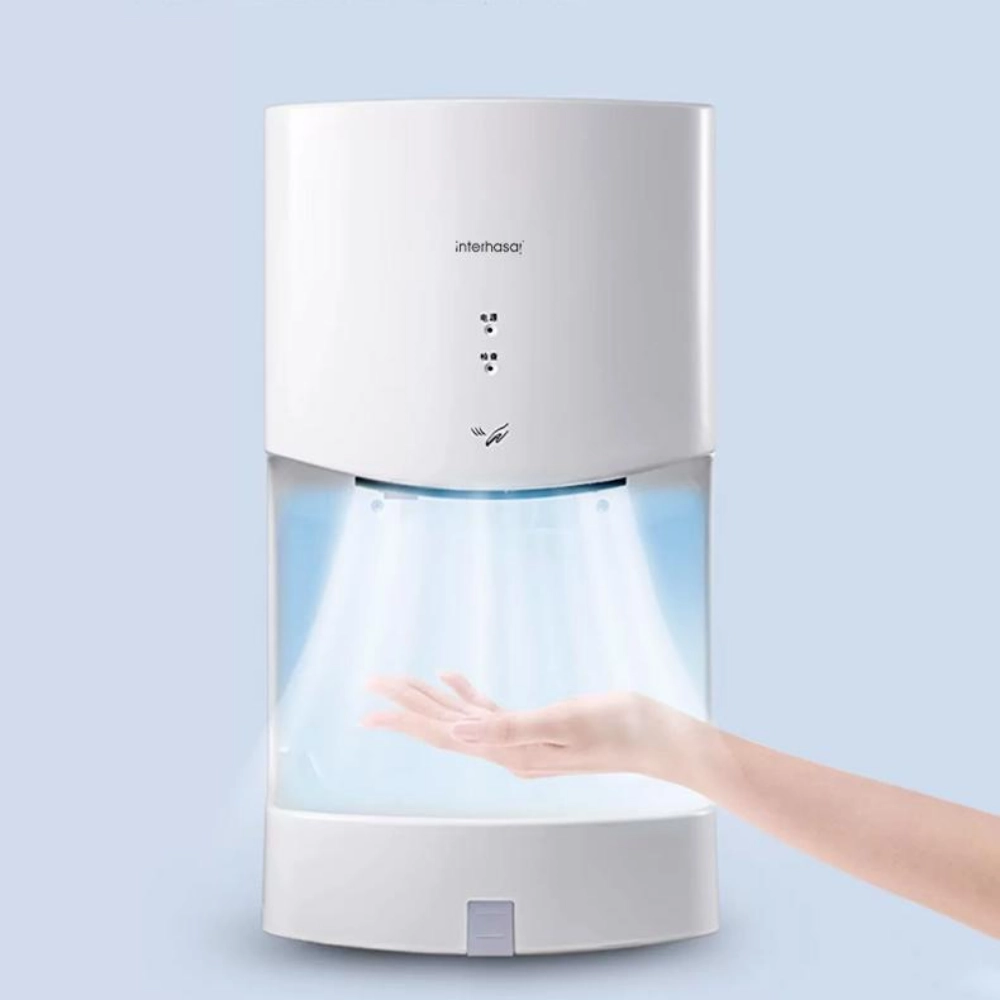
High-traffic airports prioritize cycle time, motor life, queue reduction and service access. Hotels often give more weight to noise, finish and visual coordination. Healthcare buyers should review cleaning access, touchless activation, filter claims and evidence. Schools need robust mounting, simple maintenance and controlled energy use. The best type therefore depends on the weighted project requirements, not a universal ranking.
| Dryer Format | Best-Fit Use Case | Primary Advantage | Trade-Off to Evaluate | Buyer Verification |
|---|---|---|---|---|
| Hands-under-high-speed | Offices, restaurants, retail and compact washrooms | Familiar use pattern and generally compact wall footprint | Air direction, sound, heater mode and clearance | Drying test, sound evidence, mounting drawing and maintenance access |
| Hands-in or jet format | High-traffic sites where rapid, guided hand placement is preferred | Controlled hand position and strong visual differentiation | Floor projection, water management, internal cleaning and footprint | Cleaning procedure, drainage/water collection design and repeated-use test |
| Water-tray format | Sites seeking to capture water below the drying zone | Can reduce visible water reaching the floor when maintained correctly | Tray capacity, removal, cleaning frequency and overflow risk | Tray removal demonstration, cleaning SOP and peak-traffic trial |
| Traditional warm-air format | Lower-traffic or budget-led projects | Simple, familiar operating concept | Drying time, energy per successful dry and heater dependence | Timed drying test and energy calculation using approved model data |
| Integrated wash-and-dry system | Premium projects seeking an integrated basin experience | Reduces movement between washing and drying points | Basin compatibility, splash control, service access and installation coordination | Mock-up, basin test, coordinated shop drawing and service plan |
For private-label buyers, define the platform before discussing color. Confirm motor type, rated life, airflow, heater control, sensor logic, voltage, PCB protection, housing material and test plan. Logo, finish and packaging should be approved only after the performance sample meets the target market requirements.
For private-label programs, housing material, finish, voltage and control options should be confirmed before sample approval.
Interhasa, a manufacturing facility that provides commercial bathroom devices for hygiene mostly, lets you experience the best of all those three types of hand dryers presented earlier. When you want a hands-under hand dryer, you can invest in their Shield Face High-Speed Hand Dryer, which is a new arrival, equipped with a switch that allows you to choose whether you want cool air or warm air to dry your hands.
Their hands-in dryer products are also promising. There’s the High-Speed Hand Dryer With Water Tray, which is, however, designed not in a U-shape, but rather in a C-shape. This dryer also offers high-speed performance.
Meanwhile, for its V-bladed hand dryer, Interhasa’s take comes in the form of its Model 3891 Hand Dryer, stunning in V shape, and made of stainless steel shell material, housing a system that produces minimal noise.
Installing these hand dryers is very easy. Own an efficient commercial hand dryer for your business. Connect with Interhasa now and request a quote. Welcome to exquisite meets sustainability.