
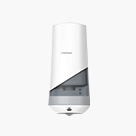
Engineered with UV-resistant ABS material and an IPX4 moisture-proof housing for extreme durability. Delivers fast, reliable sensor activation to prevent bacterial buildup around the nozzle area.
Explore ProductMeet Us at 140th Canton Fair! Phase 1 Booth:3.1M31 I Phase 2 Booth:10.1 I33-34
While does UV kill germs is proven by science, a UV soap dispenser can only act as a primary defense on any liquid soaps and dispensing nozzles, but not as an instant liquid sterilization. For facility managers, choosing a UV-C soap dispenser provides an extra layer of hygiene, provided the device adheres to UV sanitizer safety standards.
The Interhasa UV soap dispenser pairs touchless sensor technology with targeted ultraviolet light to minimize cross-contamination in public and medical restrooms. This guide evaluates the effectiveness, mechanism, and safety risks of adding ultraviolet light to automatic soap dispensers.
UV-C radiation involves the use of short wavelengths ranging from 200 to 280 nanometers in order to destroy microorganisms. When the germicidal light strikes the microorganisms, the light will penetrate the outer cell walls and affect the DNA or RNA within the cell. This process of the light breaks molecular bonds and thus cells are not able to reproduce and cause an infection.
This lighting is applied to the outer nozzles and outlet in the dispenser. Soaps move quickly through the area that light falls. Since the time the liquid soap remains exposed to light is less than one second, the outer nozzles are sanitized rather than sterilizing moving liquid soap.
The UV-C light kills bacteria, viruses, and fungi by direct exposure. Organisms such as E. coli, Salmonella, and influenza are vulnerable to certain optical doses.
| Target Microbe Type | Susceptibility Level | Direct Light Required? |
| Gram-Negative Bacteria (E. coli) | High | Yes |
| Enveloped Viruses (Influenza) | High | Yes |
| Fungal Spores | Moderate | Yes |
| Shadowed Microbes | None | Yes |
The light waves travel in a straight line and cannot bend around physical barriers. Dust, dried soap film, or shadowing may obstruct the path of the light waves; in such cases, the germs targeted remain alive and unaffected by the beam of light. Liquid soap opacity also limits beam penetration into thick liquid bulk.
The US Food and Drug Administration (FDA) advises not using UV systems that produce unsafe levels of UV rays. Direct exposure of skin and eyes to shortwave ultraviolet radiation results in serious burns in a matter of seconds.
FDA’s Communication on UV Safety states that there should be physical shielding and auto-switch off mechanisms to ensure safety.
The purchase of facilities must be made considering that these have enclosed reaction chambers and not exposed bulbs, as they present severe health hazards to custodial staff and everyday facility users.
Normal touchless dispensers cut down on contact transmission through the use of infrared sensors. With germicidal bulbs, bacterial colonization cannot happen to the wet dispensing spout between uses.
In one case study from the hospital setting, the number of bacteria on the spout was reduced by 34%. This makes it worth investing in for places such as airports, hospitals, and school cafeterias.
Quality control and good component housing are essential for manufacturing optical hygiene products, as low-quality products may emit radiation, experience electrical failure, and damage plastic components due to constant illumination.
Engineered with UV-resistant ABS material and an IPX4 moisture-proof housing for extreme durability. Delivers fast, reliable sensor activation to prevent bacterial buildup around the nozzle area.
Explore Product