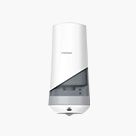



Interhasa Automatic Soap Dispenser F9309
• Voltage: DC6V / AC100~240V
• Rated Power: ≤20W
Meet Us at 140th Canton Fair! Phase 1 Booth:3.1M31 I Phase 2 Booth:10.1 I33-34

Determine the appropriate capacity for a foaming soap dispenser by calculating daily handwashing events, soap volume per activation, and the interval between scheduled refills.
Evaluate refill options, compatibility of pumps used, and servicing processes along with volume of the tank. Interhasa supplies 300 ml F9303 desk dispenser and 1,000 ml F9309 wall dispenser, hence the choice will depend on the installation type and the refill process.
An empty dispenser is disruptive and demands immediate refill; while having too large a tank takes up unnecessary space and complicates the servicing process. Determine the size based on the volume needed and the servicing process required, not the looks of the dispenser. Evaluate the volume of visitors, frequency of hand washing, and basins served in order to determine demand.
Consider the demand during the weekend, special days, or any other time when the demand increases. For varying demand, plan for the peak periods and have reserves available. Compare the usage and refill frequency in order to determine if the shortage is due to insufficient tank capacity, extra demand, or poor servicing.
Use footfall as a starting point, not a direct count of soap activations. Estimate visitors per washroom using venue, occupancy, and sink access; count staff separately if needed.

Map each dispenser to the basins it serves and note queues or awkward reach. A commercial foam soap dispenser serving multiple basins may require a larger capacity or more frequent refills than a unit installed in a low-traffic restroom.
Calculate daily demand as: handwashing events × doses per event × measured soap volume per dose. Use stated output only when it matches the selected soap and mode; otherwise, measure actual output during commissioning.
Measure a foaming soap dispenser rather than assuming every model delivers the same volume. An automatic foam soap dispenser can vary with pump settings, formulation, or sensor behavior, so test the intended refill before calculating demand.
Multiply daily consumption by days between service visits, then add a reserve for demand variation and staff response time. A unit checked each shift needs a different buffer from one checked only during scheduled cleaning.

Record refill dates, quantities, and unexpected empty events. Follow the CDC’s hand-hygiene guidance and manufacturer instructions; never top off a partially empty reservoir.
A larger reservoir is not better if it projects into a narrow route or is hard to clean. Before drilling, check mounting height, reach, door swing, refill clearance, and wall structure.
A wall mounted foam soap dispenser must allow reservoir access without dismantling nearby fittings. Leave room for refills and cleaning tools, and choose fixings suited to the wall.
Sensor range, repeat triggering, pump condition, and foam quality affect use. If a unit double-doses, leaks, or produces watery foam, check alignment, nozzle, power, pump, and soap specification before increasing capacity.
Choose a touchless foam soap dispenser only after confirming reliable detection and consistent dosing in real traffic. Test the approved formulation; ordinary liquid soap may clog a foam mechanism if not designed for it.
Use one worksheet per restroom zone so purchasing and housekeeping compare like with like. Record these inputs before ordering:
| Input | What to record | Why it matters |
|---|---|---|
| Daily handwashing events | Estimated activations | Establishes demand |
| Dose per activation | Measured ml or maker specification | Converts events to volume |
| Service interval | Days or shifts between checks | Sets coverage |
| Peak-demand reserve | Based on observed variation | Reduces empty-unit risk |
| Installation limits | Space, mounting, refill access | Confirms fit |
Compare the foam soap dispenser refill format, lead time, serviceability, and parts availability. For example, 600 activations per day × 1 ml per activation × five days equals 3,000 ml; a 20% planning reserve raises the requirement to 3,600 ml of total usable capacity across the dispensers serving that zone. Divide the requirement across the planned units and confirm their actual capacities and refill thresholds. Adjust the reserve to match observed demand variation.
A large capacity soap dispenser is justified only when demand requires it; Interhasa’s 9305 model supports liquid, spray, or foam, while the F9309 model is listed for foam. Confirm mode and dose before approval.
• Voltage: DC6V / AC100~240V
• Rated Power: ≤20W

A foaming soap dispenser should be sized using measured use, dose volume, refill frequency, and peak demand—not tank volume alone. Confirm installation, soap compatibility, and maintenance needs together to keep the unit available without avoidable service work.
Use operating records to adjust refill intervals after commissioning and set a minimum-stock trigger for housekeeping. Review the Interhasa soap-dispenser range against traffic, access limits, and replenishment needs before finalizing the capacity plan.
Multiply daily handwashing events by measured dose volume, then by days between refills; add a reserve based on demand variation.
Check footfall, repeat activations, leaks, dose settings, and refill compatibility. Compare service records with the estimate before choosing a larger unit.
Confirm wall strength, mounting space, reach, refill clearance, power requirements for sensor models, and compatibility with the specified soap and pump.