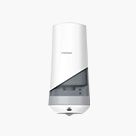



مجفف الأيدي عالي السرعة A3868 من Interhasa
مجفف الأيدي المدمج من Interhasa طراز 3868، صغير ولكنه قوي، تصميم سلس ليتناسب مع ديكور الحمام الخاص بك. مخرج الهواء النحيف يجعل السرعة سريعة، يجفف يدك في 8-10 ثوانٍ، اتصل بنا لمزيد من التفاصيل
استكشاف المنتجMeet Us at 140th Canton Fair! Phase 1 Booth:3.1M31 I Phase 2 Booth:10.1 I33-34

Choose a restaurant hand dryer by matching it to peak traffic, not a headline drying time. Confirm real cycle time on a sample, then check splash control, noise at the mounting position, electrical capacity, wall structure and service access. A compact model may suit a small washroom; a higher-power unit with splash protection may suit a busy one. Interhasa’s range includes compact, higher-power and stainless-steel options, but the right choice depends on your site data and a written specification.
Restaurant washroom traffic arrives in bursts. Guests queue during a turnover, staff need quick access, and a wet floor can affect service. Use these seven checks to compare models, then test a sample and put the results in your RFQ.
A 120-seat restaurant may serve 300 guests in a peak period, but the washroom sees them in clusters. That pattern stresses the dryer more than the daily total suggests; wet floors, noise and queues affect the dining experience.
Treat the dryer as part of service flow. It must fit the traffic pattern, room layout and cleaning routine. The types of commercial hand dryers guide explains the main configurations before you shortlist models.
Use a peak-hour estimate, not an annual count:
Peak guests × washroom-use rate × dryer-use rate ÷ peak minutes = cycles per minute
Hypothetical example: 300 guests in a peak period, with 70% using the washroom and 60% of those visits in 90 minutes, gives about 126 visits, or 1.4 per minute. At 20 seconds per person, one unit could theoretically handle three per minute. Because guests arrive in clusters, one unit may still form a queue while sitting idle later.
Add staff traffic and an events buffer. Two dryers may be more useful than one faster unit if two people can dry at once. The planning question is not “how many washes per day?” but “how many people arrive together?”
A quoted drying time is not cycle time. The guest still has to approach, position their hands, move them through the air stream and step away. A short dry can still create a queue if the air stream is narrow, the sensor is slow or the unit is awkward to use.
Interhasa lists 8–10 seconds for the أ3868 and 5–7 seconds for the 2688. Confirm the test method on a sample; hand size, wetness, distance from the nozzle and procedure all change the result.
Air speed is nozzle velocity, measured in meters per second. It does not guarantee drying time: Interhasa lists 95 m/s for the A3868 and 90 m/s for the 2688, but hand position and air pattern still matter. The 3892 page lists a 304 stainless steel housing if that material matters to your project.

High air speed can blow water off the hands before it evaporates. An outward-facing nozzle or raised hands can send water to the floor, wall or nearby fittings, leaving a slippery patch during service.
Check the air-outlet angle, distance from the wall and whether the unit has a tray. The أ3889 is listed with a water tray for washrooms where floor water is a concern; ask for tray capacity, dimensions and cleaning instructions. The HEPA filter guide explains filtration, but a filter does not replace cleaning. HEPA means high-efficiency particulate air: a pleated filter for fine particles.
An IP rating protects the enclosure, not the floor; the first digit covers solids and the second water. The 2688 page lists IPX4 (splash resistance); the A3868 page lists IPX1 (protection from vertically falling drops). Neither means waterproof or replaces a floor-water plan.
No single decibel number fits every restaurant; local rules, lease conditions, room size and the nearest table all matter. A level that is fine in a lobby can be intrusive in a small dining room with hard surfaces.
Ask for sound pressure data at one meter and at the nearest guest seat, in each mode. If it is unavailable, test the sample in the room. Listen for tone as well as volume: a high-pitched whine can be more noticeable than a slightly louder, smoother sound. A vestibule usually gives more separation than a wall shared with a banquette.
Most failed installations surface too late: the circuit cannot carry the load, the wall cannot take the fixing, or the unit does not fit the space. Check all three before you approve the model.
Confirm voltage, frequency, wattage, current, circuit protection and whether the unit is hard-wired or supplied with a plug. Current is calculated from page-stated wattage and nominal voltage; confirm actual draw and start-up current with the manufacturer and a licensed electrician.
| Model | Page-stated power | Approx. current at 120 V | Approx. current at 230 V |
|---|---|---|---|
| Interhasa A3868 | 1,200 W | 10 A | 5.2 A |
| Interhasa 2688 | 1,800 W | 15 A | 7.8 A |
| Interhasa 3892 | 1,250 W | 10.4 A | 5.4 A |
The 1,800 W figure matters in a 120 V market. Fifteen amps is the full rating of a standard 15 A circuit before start-up current, other loads or continuous-use rules, so a dedicated circuit may be needed. The electrical requirements guide explains the checks; the site electrician and local code should make the final call.
Confirm the IP rating and insulation class for the exact SKU. The A3868 page lists IPX1 and Class II. Class II means double insulation, so protection does not rely on an earth connection; that is model-specific. If the washroom is washed down, ask whether the unit suits that cleaning method.
Check wall construction, fixing method, mounting height, clearance and reach to the controls. Hollow stud, tiled block and concrete walls need different anchors. Get the template and unit weight before drilling. The A3868 is listed at 240 × 160 × 250 mm; the 2688 at 300 × 190 × 650 mm.
A door swing, mirror, soap dispenser or handrail can make an installation awkward. If the washroom must meet the Americans with Disabilities Act (ADA) or another accessibility standard, check control reach and operating space against the version adopted in your market. The ADA guide covers the questions but does not replace a local review.

| تحقق | What to test |
|---|---|
| 1. Peak traffic | Back-to-back cycles at peak pace |
| 2. Real drying time | Consistently wet hands; time the full movement |
| 3. Splash | Floor, wall and fittings after repeated use |
| 4. Noise | One meter and nearest guest seat |
| 5. Electrical and IP | Nameplate, plug or hard-wire, IP, Class II |
| 6. Mounting | Template, wall, height, reach, door swing |
| 7. Cleaning and service | Tray, filter, nozzle, spare parts |
Run the sample with several users. Hand size and technique affect results. Match sample voltage to your market; a 220–240 V sample does not prove a 110–120 V version. Record results and attach them to the RFQ.
During the test, also check cleaning access: staff should be able to remove the tray or filter, inspect the nozzle and reach service parts without dismantling the unit. Ask for service steps and replacement-part numbers.
An RFQ should tell the manufacturer which configuration you need and which evidence you will use to approve it. Include:
Interhasa was established in 2007, manufactures commercial washroom products and offers OEM/ODM support. Confirm the exact scope and commercial terms in your quotation. The specification guide can turn the seven checks into a comparison sheet, and the hand dryer range shows available configurations.
مجفف الأيدي المدمج من Interhasa طراز 3868، صغير ولكنه قوي، تصميم سلس ليتناسب مع ديكور الحمام الخاص بك. مخرج الهواء النحيف يجعل السرعة سريعة، يجفف يدك في 8-10 ثوانٍ، اتصل بنا لمزيد من التفاصيل
استكشاف المنتج
It depends on electrical capacity, maintenance, waste handling and guest preference. Compare full operating cost and test with real users; do not assume one option is cheaper or cleaner.
Use the peak-cycle formula. A fast-turn room with a small washroom may need two units; a larger room may manage with one. Count staff, events and seasonal peaks.
No. IPX4 means protection against splashing water under the rating’s test conditions. It does not mean the unit can be submerged, hosed down or pressure-washed. Confirm the cleaning method.
Evidence depends on the model, filter, maintenance and study design. A HEPA filter captures fine particles but does not replace hand washing, surface cleaning or a service schedule. Ask for test data for the exact model.
Clean the housing and nozzle, check the sensor and tray, clean or replace the filter where fitted, and inspect the mounting fixings. Ask for service intervals, part numbers and warranty terms.
Specify a restaurant hand dryer with seven checks: peak traffic, real drying time, splash and floor water, noise, electrical supply and IP rating, mounting and clearance, and cleaning access. A faster or more powerful unit is not automatically better. The right unit fits your room, circuit and cleaning routine, with evidence you can verify.
Interhasa’s range includes compact, higher-power and stainless-steel configurations, plus a model listed with a water tray. Send your peak traffic estimate, washroom dimensions, wall construction, voltage and target market. We can confirm model details, request the right drawing and prepare a quotation.