Meet Us at 140th Canton Fair! Phase 1 Booth:3.1M31 I Phase 2 Booth:10.1 I33-34



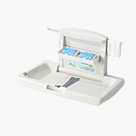


ADA Baby Changing Station: Requirements for Baby Changing Stations in Public
Public baby changing stations must comply with ADA guidelines to ensure accessibility for individuals with disabilities.
These regulations cover installation height, operable parts, required clearances, and other key factors to make public restrooms more inclusive.
This article outlines the essential requirements for ADA-compliant baby changing stations.

ADA Baby Changing Station: Things You Should Know
Installation Height and Reach Requirements
Proper height placement ensures accessibility for all users, including those in wheelchairs.
Consider the following:
Closed Position: The highest operable part of the station, such as the handle or latch, must be no more than 48 inches from the finished floor to remain within reach range.
Open Position: The changing surface should be positioned between 28 and 34 inches above the floor, ensuring a comfortable and accessible working height.

Operable Parts Must Be Easy to Use
All operable parts of a commercial baby changing station, such as handles and latches, must be usable with one hand and should not require:
- Tight grasping
- Pinching
- Twisting of the wrist
Additionally, the force required to operate these parts should not exceed 5 pounds to ensure ease of use for all individuals.

Required Clear Floor Space for Accessibility
ADA guidelines for commercial bathroom dimensions specify the required clearances around baby changing stations.
There should be a clear floor space of at least 30 inches by 48 inches must be provided in front of the station to allow wheelchair users to approach easily.
This space should support a forward approach, with adequate knee and toe clearance underneath the unit.
When the station is open, it must not obstruct the accessible route or create barriers. A minimum pathway width of 36 inches should be maintained.
Protrusion Limits to Prevent Hazards
To ensure safety for individuals with visual impairments, ADA regulations limit how much a changing station can extend from the wall.
When in the closed position, the station should not protrude more than 4 inches from the wall.
This helps prevent accidental collisions and ensures compliance with public washroom dimensions for accessibility.
Location Considerations for Public Facilities
While ADA changing room requirements do not mandate that all public restrooms have a baby changing station, any facility that installs one must ensure it is accessible.
It is best to install baby changing stations in “family” or “unisex” restrooms to accommodate all caregivers.
If installed in multi-user restrooms, the station should be placed in an area that does not obstruct pathways or interfere with the use of other fixtures.
TIP: Providing clear signage indicating the presence of an ADA baby changing station improves accessibility and usability.
ADA Baby Changing Stations: Conclusion
By following these guidelines, businesses and public facilities can ensure ADA compliance while making restrooms more convenient for caregivers and individuals with disabilities.
Proper height placement, clear floor space, and ease of use are all essential in providing a safe, accessible, and user-friendly commercial baby changing station.
For baby changing station product inquiries, visit or contact Interhasa today!
Resources:
ADA Requirements for Baby Changing Stations