Meet Us at 140th Canton Fair! Phase 1 Booth:3.1M31 I Phase 2 Booth:10.1 I33-34





Sensor Faucet Guide: How to Select a Model

If you’re looking to upgrade to a sensor faucet, the key factors to consider include sensor type, power source, flow rate, and installation requirements. For a commercial or private restroom, selecting the right model can improve hygiene, conserve water, and reduce maintenance costs.
This guide will walk you through the essentials, ensuring you make an informed decision that fits your needs.
What Is a Sensor Faucet?
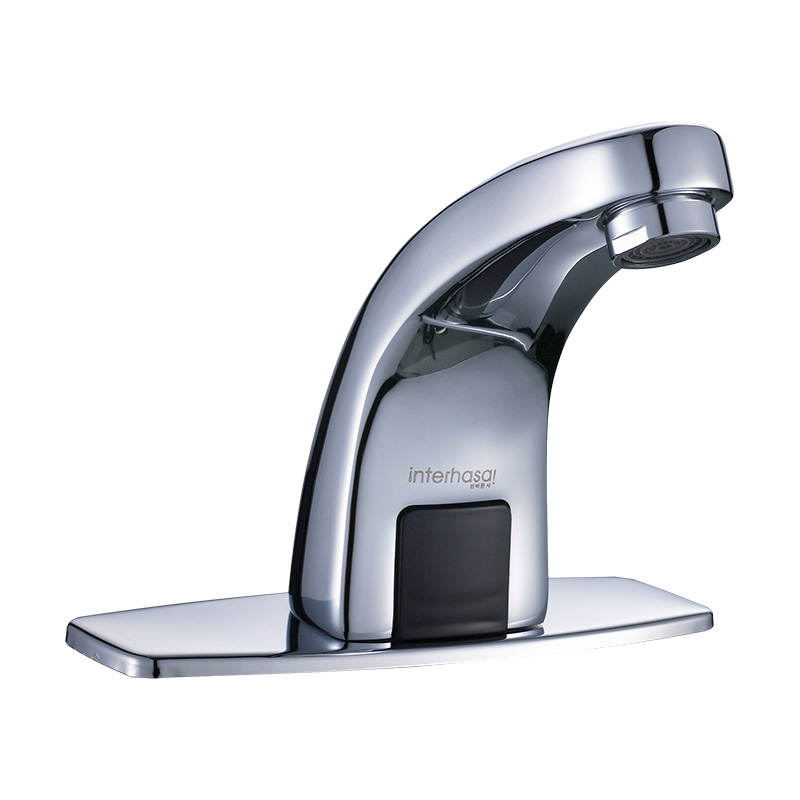
A sensor faucet is a touch-free, automatic faucet that uses motion detection to turn water on and off. These faucets help maintain hygiene by eliminating the need to touch handles, reducing the spread of bacteria. They also conserve water by shutting it off automatically when it is not in use.
Key Takeaways:
- Touchless Operation – Activates water flow when motion is detected, reducing germ transmission.
- Water Conservation – Uses only the necessary amount of water, lowering utility costs.
- Low Maintenance – Minimizes wear and tear since there are no manual handles.


Key Factors to Consider When Choosing a Sensor Faucet
1. Sensor Technology: Infrared vs. Capacitance
Most sensor faucets use either infrared (IR) sensors or capacitance sensors.
- Infrared Sensors: These are the most common and work by emitting infrared light, which detects hand motion and activates the water flow.
- Capacitance Sensors: These detect electrical field changes around the faucet. They are less common and unsuitable for metal sinks, as metal can interfere with their function.
For most applications, infrared sensor faucets offer better reliability and flexibility.
2. Power Supply Options: Battery vs. Hardwired
Sensor faucets require a power source to operate. Here are the most common options:
- Battery-Powered: This is ideal for locations without electrical access. Depending on usage, it typically lasts 1-5 years.
- Hardwired with Battery Backup: Recommended for high-traffic areas, reducing battery replacements.
- Solar-Powered: Uses ambient light to charge, reducing battery dependency.
- Turbine-Powered: Generates power from water flow, best for high-use environments.
3. Flow Rate and Spray Type
Different settings require different flow rates and spray types:
- Standard Commercial Restrooms: 0.5 GPM (Gallons Per Minute) for water efficiency.
- LEED-Certified Buildings: 0.35 GPM to meet sustainability standards.
- Healthcare Facilities: Higher flow rates with laminar spray to prevent airborne contamination.
4. Installation Considerations
Before purchasing, ensure the faucet fits your existing sink setup:
- Mounting Type: Choose between deck-mounted and wall-mounted models.
- Sink Compatibility: Avoid splashing issues by matching the faucet size with the sink basin.
- Temperature Control: Some models offer manual or thermostatic mixing valves for temperature adjustment.
Additionally, if you’re installing multiple touchless fixtures, it’s important to consider electrical requirements, especially for complementary products like hand dryers. Learn more about hand dryer electrical requirements here.
5. Maintenance and Long-Term Costs
- Battery Replacement: Choose a model with solar or turbine energy harvesting to reduce costs.
- Easy Service Access: Look for above-deck components for simpler maintenance.
- Durability: Opt for brass or stainless steel models for a longer lifespan.
FAQ: Common Questions About Sensor Faucets
How do sensor faucets work?
Sensor faucets use infrared or capacitance sensors to detect movement. Once activated, the faucet releases water and shuts off automatically when no motion is detected.
Are sensor faucets worth the investment?
Yes! They reduce water waste, improve hygiene, and lower maintenance costs, making them ideal for commercial and residential use.
Can I install a sensor faucet myself?
It depends on the model. Battery-powered models are easier to install, while hardwired versions may require a plumber for proper electrical connections.
How long do sensor faucet batteries last?
Battery life varies, but most last 1-5 years, depending on usage frequency and power efficiency.
Do sensor faucets save water?
Yes! Sensor faucets automatically shut off when not in use, saving up to 70% more water than manual faucets.
Conclusion
Upgrading to a sensor faucet is a smart choice for hygiene, convenience, and sustainability. Whether you need a basic model for a restroom or a high-tech option with Bluetooth control, selecting the right faucet involves considering sensor type, power source, flow rate, and installation needs.
At Interhasa, we specialize in commercial-grade sensor faucets designed for durability and efficiency. Visit our website, Interhasa.net, to explore our latest models and find the perfect fit for your needs.