
Meet Us at 139th Canton Fair! Phase 1 Booth: 3.1L38 | Phase 2 Booth: 10.1i33-34

×

Recessed Hand Dryer vs Surface-Mounted Hand Dryer: Which Installation Fits Your Space?

August 31, 2026

Quick Answer

Choosing between a recessed hand dryer and a surface-mounted model impacts facility safety, wall space, and installation budgets. 

For tight spaces and modern layouts, a hand dryer recess kit delivers a flush finish that satisfies strict ADA hallway clearance rules. For faster retrofits and lower labor costs, surface-mounted hand dryers attach directly to existing drywall without cavity construction. 

Interhasa manufactures both options with OEM customization capabilities to fit any wall depth. This guide compares both mounting types to help facility managers select the right layout for commercial restrooms.

Recessed vs surface-mounted hand dryer installation comparison for commercial washrooms

How Recessed Installation Works? 

A recessed hand dryer installation allows the hand dryer to be mounted in a cavity cut into the wall. This provides a flush installation against the wall surface. It minimizes obstruction to high-traffic walkways and gives a sleek and modern appearance.

Wall Thickness Requirements

For the recessed system, you will need a minimum cavity of 4 inches deep. The standard stud wall 2×4 is sufficient for most compact units. Thin partitions will require back-to-back reinforced panels.

Recess Kit Components 

The recess hand dryer kit is made up of a quality stainless steel trash can or rough-in box. Other components include mounting flanges, dripless splash trays, and electrical conduits. Interhasa makes customizable OEM frames to fit for non-standard cavity dimensions.

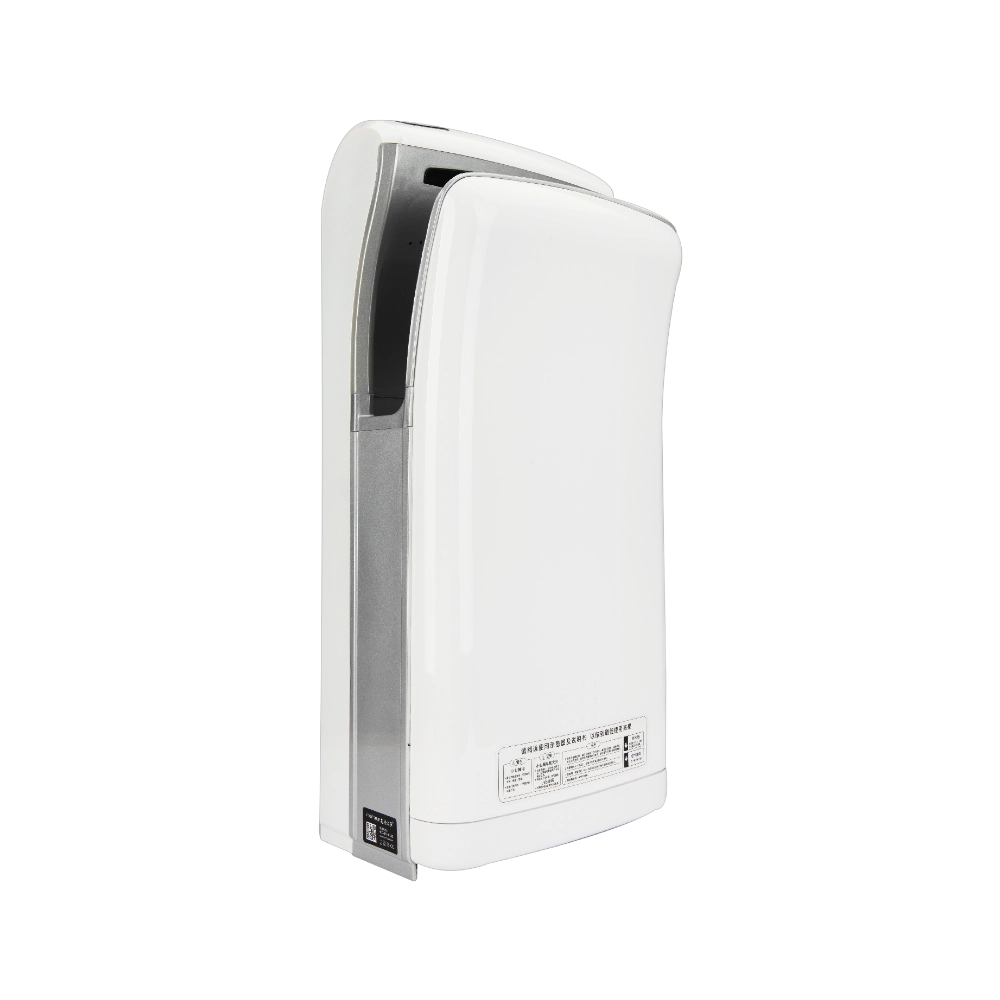
Interhasa Hand Dryer 1688

Interhasa 1688 classic model double side air outlet high speed 1800W hand dryer, with light indicator, 4 infrared sensor, on/off switch, hot/cold switch, multy color available to match your deco design, accept for OEM order or brand distributor.

Explore Product
Interhasa Hand Dryer 1688

How Surface-Mounted Installation Works?

Surface-mounted installation entails fastening the dryer cabinet directly to the walls already built. In this process, technicians secure the frame on wall studs or masonry structures with heavy-duty screws.

The installation also does not entail making any structural changes to the walls or interior boxes. Electricians feed the conduits through surface raceways or rear wall knockout areas. This entire setup speeds up replacement projects significantly.

Interhasa Stainless Steel Hand Dryer Model Model 90005

Interhasa Classic Style Hand Dryer with Stainless Steel Material, High speed dryer dry your hand in 5 seconds, brush or shiny stainless steel available for choice

Explore Product
Interhasa Stainless Steel Hand Dryer Model Model 90005

Cost Comparison (unit + installation labor)

Surface-mounted fixtures are cheaper and easier to install. The installation of recessed fixtures is more expensive, as well as requires additional framing of the walls.

Expense CategorySurface-Mounted DryerRecessed Hand Dryer
Initial Unit CostLower Base CostHigher Base Cost
Wall PreparationZero Framing RequiredStructural Wall Cutting Needed
Labor Hours1 to 2 Hours3 to 5 Hours
Overall BudgetEconomicalPremium Investment

Facility managers can explore detailed spec sheets on the Interhasa Hand Dryer Collection to evaluate electrical parameters and housing dimensions before installation.

What are the Best-Fit Scenarios for Each Type? 

Mounting is based on the amount of traffic to the site, physical space available, and how the building is structured.

Selecting Your Mounting Types


New Construction
High Traffic Area
Recessed Mounting
(ADA Compliant & Prevents Bumping)
Retrofit Project
Low Wall Cavity
Surface Mounting
(Faster Installation & Lower Labor Cost)

High Traffic Airports / Schools

High-use areas need efficient management of traffic. The use of the ADA recessed hand dryers helps reduce accidents in crowded and narrow corridors. In one recent upgrade of a regional transport facility, changing to flush wall mounting lowered incidents of accidental impacts by 40 percent.

Retrofit Projects 

Older buildings have solid concrete walls or existing pipes inside cavities. With surface mounting, there is no need for expensive structural modifications. This then keeps a low budget for wall modifications. 

What are the ADA Considerations for Each Type?

Under the Americans with Disabilities Act (ADA Protrusion Limits), wall projections within circulation paths are restricted. Items that are mounted at a height ranging from 27 inches up to 80 inches are not allowed to protrude more than 4 inches into the corridors.

  • Surface-Mounted Units: The standard surface-mount units tend to protrude by 6 inches to 9 inches. Warning bar barriers on the floors beneath are necessary for compliance with the ADA.
  • Recessed Units: Installation of fully recessed hand dryers would result in less than 4 inches of cabinet projections. This configuration satisfies ADA rules without extra floor accessories.

Frequently Asked Questions (FAQs) 

What is the recommended mounting height for a hand dryer?

  • The mounting height of typical commercial hand dryers should be at 38-48 inches (965-1220 mm) above the floor level. In order to comply with universal design requirements, the operating mechanism of the dryer should not be mounted higher than 48 inches.

What are the different types of hand dryers?

  • Hand dryers are classified according to airflow type, activation system, and installation method. The basic classifications are: standard warm air hand dryers, high speed jet and blade dryers, touchless automatic systems, and sink-mounted models.

How high above the floor should a hand dryer outlet be installed?

  • The installation height for an ordinary hand dryer is usually 45 to 54 inches (1140 to 1370 mm) from the floor. The exact height will depend on the particular model. The installation will be hidden behind the body of the hand dryer unit.

How close can a hand dryer be to a sink?

  • The distance between a hand dryer and wash basin or sink in most cases is expected to be in the range of 12 to 24 inches to ensure that there are no splashes, but with integrated sink-mounted models, it can be just a few inches.

RECENT BLOGS
Recessed Hand Dryer vs Surface-Mounted Hand Dryer: Which Installation Fits Your Space?

Quick Answer Choosing between a recessed hand dryer and a surface-mounted model impacts facility safety, wall space, and installation budgets.  For tight spaces and modern layouts, a hand dryer recess kit delivers a flush finish that satisfies strict ADA hallway clearance rules. For faster retrofits and lower labor costs, surface-mounted hand dryers attach directly to […]

August 31, 2026
Peened Grab Bar vs Knurled Grab Bar: Which Surface Texture Should You Choose?

Quick Answer  Selecting the right peened grab bar or knurled grab bar depends on your specific facility needs. The former uses media blasting to create a uniform, non-abrasive non-slip finish that cleans easily and satisfies ADA requirements. Meanwhile, the latter one features deep cross-hatched grooves that offer intense mechanical grip but demand more effort during […]

August 30, 2026
Hotel Resort Bathroom Fixtures Wholesale Sourcing: A Wholesale Buyer’s Checklist

Quick Answer Hotel resort bathroom fixtures wholesale sourcing requires evaluating bulk pricing, verification of regional compliance standards, and automated factory output capacity. Interhasa bathroom fixtures simplify this through automated production, reducing maintenance overhead and water consumption.  This guide outlines every phase of the procurement workflow to help buyers mitigate project delays, manage budgets, and maintain […]

August 25, 2026
GET A CONTACT TO
SEND US A MESSGAE​
Get a Quote
Search
PARTNER WITH THE HAND DRYER EXPERTS.

As a certified manufacturer, we offer competitive bulk pricing and custom solutions for your brand.