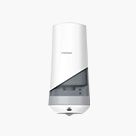
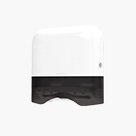

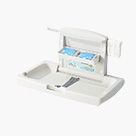


Dispensador de jabón Interhasa 9305
Descubra suministros de baño comerciales de alta calidad y confiables, diseñados para satisfacer sus necesidades. Nuestro compromiso con la excelencia garantiza durabilidad, eficiencia y...
View Product DetailsMeet Us at 140th Canton Fair! Phase 1 Booth:3.1M31 I Phase 2 Booth:10.1 I33-34

Selection of either foam vs liquid soap dispenser is contingent upon the type of soap available and other factors such as demand for the product, frequency of refilling, and maintenance capacity. In foam soap dispensers, soap comes already lathered, while in the latter, one has to generate lather.
El 9305 has a capability for liquid, spray, or foam soap, while the 300 ml F9303 desktop is designed for foam application. Comparison in terms of capacity, output type, installation, and approved soap must be performed before ordering; Interhasa offers several options for commercial washroom needs.
The main difference between foam and liquid soap dispenser is that the former creates foam using a soap compatible with air in the special nozzle or pump; liquid one dispenses soap without mixing with air so people have to do it themselves by adding water to soap.

Before buying a dispenser, you have to find out whether your dispenser is designed for foam, spray, or liquid application and which soap you can put into it. Incompatible refills lead to problems like low-quality foam, inconsistent doses, slow application, and clogged pumps.
When installing new dispenser, you should check its performance when working with the chosen refill for several times. The things to check include output quality and consistency, presence of any leaks, nozzle condition, and proper pump return function.
Foam spreads across wet hands and may feel easier to rinse, but coverage depends on dose, hand size, and technique. Liquid soap provides a visible dose and may better fit established site procedures.
| Procurement factor | Foam output | Liquid output |
|---|---|---|
| User experience | Ready-made lather | User creates lather |
| Compatibility check | Foam pump and approved formulation | Pump suited to viscosity |
| Main operational risk | Weak foam or blocked air path | Dripping or slow return |
| Selection check | Confirm foam consistency and pump compatibility | Confirm viscosity range and dose per activation |
Descubra suministros de baño comerciales de alta calidad y confiables, diseñados para satisfacer sus necesidades. Nuestro compromiso con la excelencia garantiza durabilidad, eficiencia y...
View Product Details
Do not choose by appearance alone. During a site trial, compare repeated doses, hand coverage, drips, and outlet cleaning; select a foam vs liquid soap dispenser based on observed performance rather than assumptions.
Compare cost per usable dose, not just price per litre or cartridge. Record refill volume, daily usage, leakage, and service time during busy and quiet periods before estimating annual consumption.
A bulk fill soap dispenser may reduce packaging and simplify stock handling, but refill routines still require cleaning and product control. Label approved soap, document the refill method, and avoid topping up partially used containers unless the manufacturer’s instructions permit it.
Viscosity, particles, fragrance additives, and formulation stability can affect pump performance. A commercial soap dispenser should be tested with the exact soap being purchased, because a different sample does not prove compatibility.
If output falters, check fill level, nozzle, pump, power, and air passages before replacing parts. Run repeated activations during commissioning to catch leaks or inconsistent doses before units are installed across the property.
Assign responsibility for cleaning the reservoir, outlet, and surrounding surface according to the manufacturer’s instructions. The CDC’s handwashing guidance recommends soap and clean running water; dispenser choice supports handwashing but does not replace correct technique.
A wall mounted soap dispenser needs clearance for refilling and cleaning without striking mirrors, faucets, or accessories. For sensor models, test detection from different hand positions and confirm battery access or the specified power connection before final fixing.

Hotels should weigh guest experience, housekeeping labour, and refill consistency. For offices, using compatible refill products and readily available replacement components simplifies routine servicing. High-use public washrooms, by contrast, require secure mounting, convenient maintenance access, and dispenser capacity suited to periods of heavy demand.
An automatic foam soap dispenser reduces contact with an actuator but adds sensor and power checks; it is not automatically more reliable than a manual unit. For a compact counter unit, compare the F9303; for a 1,000 ml wall-mounted foam option, review the F9309.
Descubra suministros de baño comerciales de alta calidad y confiables, diseñados para satisfacer sus necesidades. Nuestro compromiso con la excelencia garantiza durabilidad, eficiencia y...
View Product Details
Before ordering, confirm output mode, approved soap, capacity, dose consistency, mounting surface, power supply, warranty, and replacement-part availability. Record the approved specifications and refill requirements to keep purchasing, engineering, and housekeeping aligned during procurement, installation, and routine maintenance.
Request a sample and test it in the intended location with the actual refill. Record results, dimensions, and service steps so the foam vs liquid soap dispenser selection is approved before installation.
The right foam vs liquid soap dispenser matches the facility’s soap, traffic, service routine, and installation conditions. Validate dose performance and maintenance access before standardizing a model, because low purchase cost offers little value if units clog, leak, or run empty.
Use the Interhasa soap-dispenser collection to compare formats against the site specification and confirm refill compatibility. A documented sample test gives purchasing and maintenance teams a clear basis for commissioning and long-term reliability.
Neither format is universally better. Choose according to approved formulation, dose consistency, user preference, refill process, and maintenance capability.
Check refill level, soap compatibility, nozzle, pump, and power supply. Test the unit with the specified formulation before replacing parts.
Only if the manufacturer explicitly approves the formulation and output system. Foam pumps generally require compatible soap designed to produce lather.