
Встречайте нас на 139-й Кантонской ярмарке! Стенд 1: 3.1L38 | Стенд 2: 10.1i33-34

×

Energy Efficient Hand Dryers: kWh Cost & ROI Guide for Facility Managers

Август 11, 2026

Быстрый ответ 

 Using an energy efficient hand dryer helps reduce washroom power consumption by up to 80% compared to traditional heated units. The Interhasa высокоскоростные сушилки для рук deliver fast drying while lowering facility utility expenses.Actual savings depend on rated power, drying time, daily usage, and local electricity rates.

Energy per use (kWh) = Power (W) × Drying Time (seconds) ÷ 3,600,000

This guide explains kWh calculations, infrastructure impacts, and ROI metrics for facility managers looking for long-term operational savings. 

How Much Energy Does a Hand Dryer Use?

Hand dryer energy consumption is determined by their wattage rating and drying time. Conventional thermal dryers consume between 1500W and 2300W in 30 seconds, whereas high-speed modern dryers work from 500W to 1000W in just 10 to 12 seconds.

Energy consumption calculations should be done with active power measurement. Shortening drying time significantly reduces total energy consumption per usage.

Hand Dryer Wattage Comparison Table (300W-1800W)

Dryer Model TypePower Rating (Watts)Heating ElementAverage Dry TimeEnergy per 100 Uses (kWh)
Ultra-Low Power300WНикто15 seconds0.125 kWh
Compact High-Speed550 ВтOff / None10 seconds0.153 kWh
Standard High-Speed1000WDual Mode10 seconds0.278 kWh
Traditional Thermal1500WHeated30 seconds1.250 kWh
Heavy-Duty Heated1800WHeated30 seconds1.500 kWh

What is the Energy Impact of No-Heat vs Heated Models? 

A no heat hand dryer or cool air hand dryer takes between 300 to 700 watts and uses up to 65% to 80% less power compared to heated hand dryers. The heated models consume between 1,200 and 1,500 watts of power because the heaters need a lot of energy for evaporation. 

The actual energy savings vary by model and drying time.

Difference in Power Usage

  • Heated hand dryers generally have higher rated power because part of their electrical input is used to operate heating elements. Actual wattage varies considerably by model, so buyers should compare the manufacturer’s rated power and measured energy per drying cycle. 
  • No Heat Machines: Use around 300-700 watts of power. By removing the heating element, no-heat models rely primarily on high-velocity airflow generated by an electric motor to remove water from the hands.

Operational and Costs Impacts

  • Energy Per Use: Energy cost per drying cycle depends on both rated power and drying time. A higher-wattage heated dryer may consume several times more electricity per cycle than a lower-wattage high-speed model. 
  • Electrical Load: Lower-wattage hand dryers generally draw less current, which can simplify electrical planning in some retrofit projects. However, the number of dryers that can share a branch circuit must be determined based on the total calculated load, circuit rating, manufacturer installation instructions, and applicable local electrical codes. 
  • Speed: No heat high-speed machines can remove water in 10 to 12 seconds while the old heated ones take longer time.
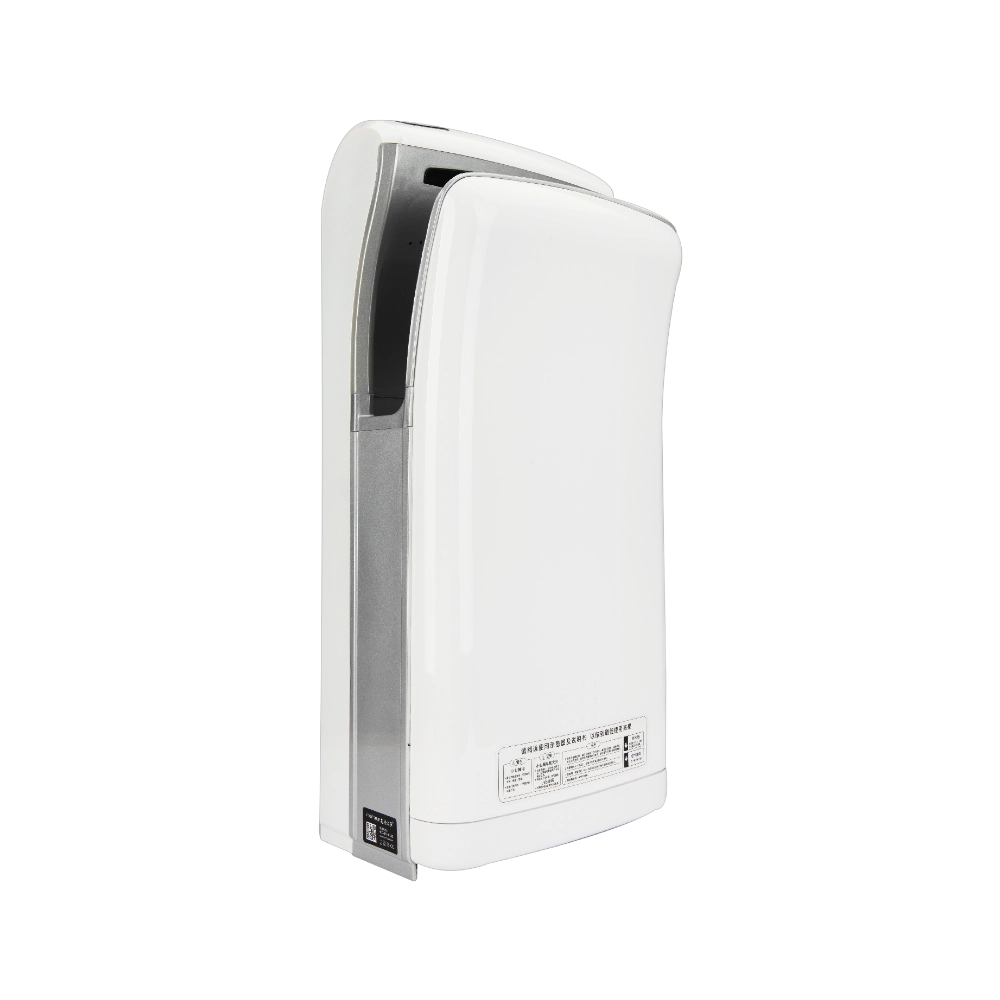
Сушилка для рук Interhasa 1688

Interhasa 1688 classic model double side air outlet high speed 1800W hand dryer, with light indicator, 4 infrared sensor, on/off switch, hot/cold switch, multy color available to match your deco design, accept for OEM order or brand distributor.

Исследуйте продукт
Сушилка для рук Interhasa 1688

How To Calculate Estimated Annual Electricity Costs? 

The following equation can be used by facility managers to calculate the annual cost of electricity. Multiply total kW by operating hours, daily user cycles, and your local power rate.

Annual Cost = (Watts ÷ 1000) × (Dry Time in Seconds ÷ 3600) × Daily Uses × 365 × Electricity Rate

Calculation Example

Assume that there is a restroom that uses 200 cycles per day at an electricity cost of $0.15 per kWh.

550W Unheated Unit (10-second dry time):

Annual Cost = (550 ÷ 1000) × (10 ÷ 3600) × 200 × 365 × 0.15

Annual Cost = (0.55) × (0.00278) × 200 × 365 × 0.15

Annual Cost ≈ $16.74

1800W Heated Unit (30-second dry time):

Annual Cost = (1800 ÷ 1000) × (30 ÷ 3600) × 200 × 365 × 0.15

Annual Cost = (1.80) × (0.00833) × 200 × 365 × 0.15

Annual Cost ≈ $164.18

What is the Total Cost Comparison between Hand Dryer and Paper Towels? 

Analyzing hand dryer vs paper towel cost savings highlights massive reduction in ongoing operational expenses. 

Hand dryers reduce the cost of operation in the bathroom to 95%. Although installing them is more expensive than buying paper towels because of the initial capital needed for the purchase and installation, they eliminate ongoing expenses for consumables, storage, restocking labor, and waste disposal.

Estimated Cost Comparison Table

Cost ComponentСушилка для рукБумажные полотенца
Upfront CostHigh ($400 – $2,000 per unit + electrical installation)Low ($30 – $150 per dispenser)
Cost Per UseNegligible ($0.0002 – $0.0018 in electricity)High ($0.01 – $0.03 for 2–3 towels per dry)
Annual Operating SpendVery low ($15 – $100 per year in power)High ($700 – $1,200+ per year for supply)
Hidden CostsMinimal periodic maintenanceHigh labor (restocking, trash, plumbing clogs)
Payback Period6 to 14 months average ROIOngoing permanent expense

What are the Key Electrical Infrastructure Considerations?

The installation of the restroom components involves assessing the load of the circuit and distribution of the panel. The heavy load of the power increases the cost of installation in building retrofits.

Circuit Load / Retrofit Costs

An average 1800W dryer consumes 15 Amps at 120V power line. This requires an individual circuit of 20A for each dryer. 

At 550W, the consumption is less than 4.6 Amps at 120V. Three units of 550W can be installed in one 15A circuit branch. This low current draw eliminates panel upgrades, saves copper wiring, and cuts electrical installation costs.

How to Choose a Low-Wattage Model?

To choose low-wattage models, consider the design of the motor, choice of materials used to build the housing, and customizing capabilities by the manufacturer before buying. Personalized B2B negotiations with the manufacturer provide room for customized solutions based on facility voltages.

The factory-direct approach provides for personalized tuning of the motor and better pricing because of volume ordering. Ordering the motors with custom wattage will ensure proper balance between airflow, noise, and power consumption.

Interhasa offers commercial hand dryer models with different power ratings, drying times, materials, and voltage configurations for offices, hospitality, public facilities, and high-traffic commercial environments. Visit our Hand Dryer Catalog или contact us to request customized low-power solutions and prices.

Buyer Checklist 

Energy-Efficient Hand Dryer Buying Checklist

  • Rated power (W)
  • Drying time per cycle
  • Energy consumption per cycle
  • Standby power
  • Voltage and frequency
  • Circuit requirements
  • Motor efficiency
  • Уровень шума
  • Filter/maintenance requirements
  • Гарантия
  • Expected service life
  • OEM/ODM availability

Ключевые выводы

  1. Hand dryer energy consumption depends on both power rating and drying time, not wattage alone.
  2. Energy per use can be calculated by multiplying power consumption by operating time and converting the result to kWh.
  3. A 550W hand dryer operating for 10 seconds uses approximately 0.00153 kWh per drying cycle.
  4. Hand dryer ROI depends on equipment cost, installation, electricity, paper towel savings, maintenance, and daily usage.

Часто задаваемые вопросы (FAQ) 

What is the most energy-efficient type of dryer?

  • The most energy-efficient dryers are those that employ the heat pump technology, which is known to reduce energy consumption by up to 65% to 70%, by reusing already heated air instead of venting hot air outdoors.

What is an energy-efficient dryer?

  • Energy-efficient dryers consume the lowest amount of electricity as compared to other types, up to 60% less than vented or condenser dryers. They utilize a closed system where the same warm air is cycled and reused.

How much electricity does a hand dryer use?

  • Hand dryers normally use up to 500W to 2000W of electricity per drying session. Since they operate for a maximum of 10 to 15 seconds per drying session, energy consumption is negligible—about 0.003kWh to 0.006kWh—equal to less than a fraction of a paisa/cent per drying cycle.

ПОСЛЕДНИЕ БЛОГИ
Оптовые закупки сантехники для гостиничных и курортных комплексов: контрольный список для оптового покупателя.

Быстрый ответ. Оптовые закупки сантехники для гостиничных курортов требуют оценки оптовых цен, проверки соответствия региональным стандартам и производственных мощностей автоматизированного завода. Сантехника Interhasa упрощает этот процесс за счет автоматизированного производства, снижая затраты на техническое обслуживание и потребление воды. Это руководство описывает каждый этап процесса закупок, чтобы помочь покупателям минимизировать задержки проектов, управлять бюджетами и поддерживать […]

25 августа 2026 г.
Как спроектировать ванную комнату в отеле: Полное руководство по выбору сантехники.

Быстрый ответ. Проектирование коммерческих туалетных комнат требует баланса между эстетикой, потоком посетителей, эффективностью использования воды и протоколами гигиены. Компания Interhasa производит полные комплекты коммерческой сантехники, включая интеллектуальные сенсорные смесители, автоматические сушилки для рук и бесконтактные дозаторы мыла. Это руководство по проектированию туалетных комнат в отелях содержит контрольные списки сантехнического оборудования, информацию о пространственном планировании, стандартах ADA и поэтапном составлении бюджета для оптимизации закупок для застройщиков. Контрольный список основного сантехнического оборудования […]

18 октября 2026 г.
Сенсорные водосберегающие смесители: руководство по соответствию стандартам LEED, CalGreen и WaterSense.

Быстрый ответ. Коммерческие объекты могут полностью соответствовать стандартам LEED v4.1, CalGreen Title 24 и EPA WaterSense, установив эффективные водосберегающие сенсорные краны. Автоматические сенсорные системы кранов Interhasa сокращают потребление воды в коммерческих туалетах до 701 TP3T. Благодаря сочетанию активации инфракрасным датчиком и низким расходам воды, эти устройства снижают коммунальные платежи и помогают […]

18 октября 2026 г.
ПОЛУЧИТЬ КОНТАКТ
ОТПРАВЬТЕ НАМ СООБЩЕНИЕ
Получить предложение
Поиск
СОТРУДНИЧАЙТЕ С ЭКСПЕРТАМИ ПО СУШИЛКАМ ДЛЯ РУК.

Как сертифицированный производитель, мы предлагаем конкурентоспособные оптовые цены и индивидуальные решения для вашего бренда.