
Meet Us at 140th Canton Fair! Phase 1 Booth:3.1M31 I Phase 2 Booth:10.1 I33-34

×

Руководство по рентабельности инвестиций и стоимости кВт·ч энергоэффективных сушилок для рук

4 сентября 2026 г.

Быстрый ответ 

 Using an energy efficient hand dryer helps reduce washroom power consumption by up to 80% compared to traditional heated units. The Interhasa высокоскоростные сушилки для рук deliver fast drying while lowering facility utility expenses.Actual savings depend on rated power, drying time, daily usage, and local electricity rates.

Energy per use (kWh) = Power (W) × Drying Time (seconds) ÷ 3,600,000

Используйте единую прозрачную формулу для каждой сушилки для рук

Энергия за одно использование (кВт·ч) = номинальная входная мощность (Вт) × измеренное время сушки (с) ÷ 3 600 000. Годовая стоимость электроэнергии = энергия за одно использование × годовое количество циклов × местный тариф на электроэнергию. Указывайте энергопотребление в режиме ожидания отдельно, когда оно существенно, и используйте метод испытания времени сушки, единообразный для сравниваемых моделей.

This guide explains kWh calculations, infrastructure impacts, and ROI metrics for facility managers looking for long-term operational savings. 

How Much Energy Does a Hand Dryer Use?

Hand dryer energy consumption is determined by their wattage rating and drying time. Conventional thermal dryers consume between 1500W and 2300W in 30 seconds, whereas high-speed modern dryers work from 500W to 1000W in just 10 to 12 seconds.

Energy consumption calculations should be done with active power measurement. Shortening drying time significantly reduces total energy consumption per usage.

Hand Dryer Wattage Comparison Table (300W-1800W)

Dryer Model Type Power Rating (Watts) Heating Element Average Dry Time Energy per 100 Uses (kWh)
Ultra-Low Power300WНикто15 seconds0.125 kWh
Compact High-Speed550 ВтOff / None10 seconds0.153 kWh
Standard High-Speed1000WDual Mode10 seconds0.278 kWh
Traditional Thermal1500WHeated30 seconds1.250 kWh
Heavy-Duty Heated1800WHeated30 seconds1.500 kWh

What is the Energy Impact of No-Heat vs Heated Models? 

A no heat hand dryer or cool air hand dryer takes between 300 to 700 watts and uses up to 65% to 80% less power compared to heated hand dryers. The heated models consume between 1,200 and 1,500 watts of power because the heaters need a lot of energy for evaporation. 

The actual energy savings vary by model and drying time.

Difference in Power Usage

  • Heated hand dryers generally have higher rated power because part of their electrical input is used to operate heating elements. Actual wattage varies considerably by model, so buyers should compare the manufacturer’s rated power and measured energy per drying cycle. 
  • No Heat Machines: Use around 300-700 watts of power. By removing the heating element, no-heat models rely primarily on high-velocity airflow generated by an electric motor to remove water from the hands.

Operational and Costs Impacts

  • Energy Per Use: Energy cost per drying cycle depends on both rated power and drying time. A higher-wattage heated dryer may consume several times more electricity per cycle than a lower-wattage high-speed model. 
  • Electrical Load: Lower-wattage hand dryers generally draw less current, which can simplify electrical planning in some retrofit projects. However, the number of dryers that can share a branch circuit must be determined based on the total calculated load, circuit rating, manufacturer installation instructions, and applicable local electrical codes. 
  • Speed: No heat high-speed machines can remove water in 10 to 12 seconds while the old heated ones take longer time.
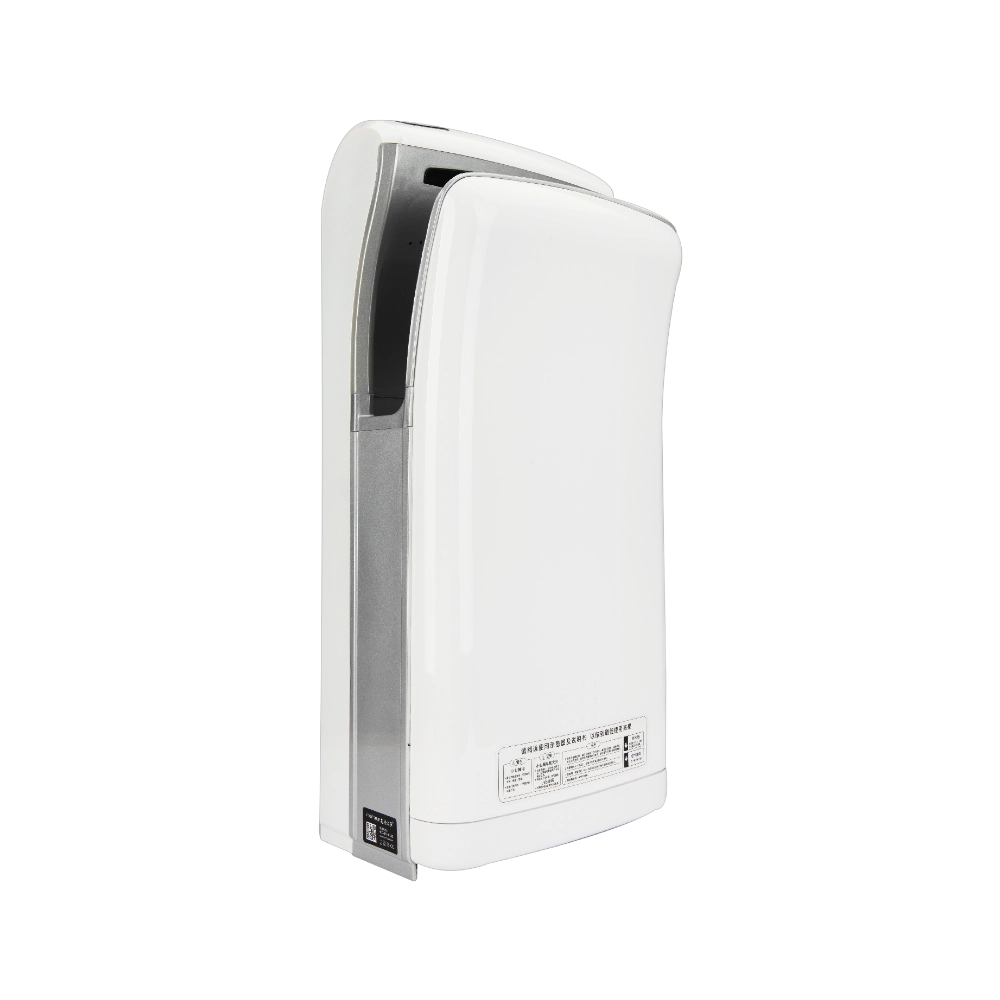
Сушилка для рук Interhasa 1688

Interhasa 1688 classic model double side air outlet high speed 1800W hand dryer, with light indicator, 4 infrared sensor, on/off switch, hot/cold switch, multy color available to match your deco design, accept for OEM order or brand distributor.

Исследуйте продукт
Сушилка для рук Interhasa 1688

How To Calculate Estimated Annual Electricity Costs? 

The following equation can be used by facility managers to calculate the annual cost of electricity. Multiply total kW by operating hours, daily user cycles, and your local power rate.

Annual Cost = (Watts ÷ 1000) × (Dry Time in Seconds ÷ 3600) × Daily Uses × 365 × Electricity Rate

Calculation Example

Assume that there is a restroom that uses 200 cycles per day at an electricity cost of $0.15 per kWh.

550W Unheated Unit (10-second dry time):

Annual Cost = (550 ÷ 1000) × (10 ÷ 3600) × 200 × 365 × 0.15

Annual Cost = (0.55) × (0.00278) × 200 × 365 × 0.15

Annual Cost ≈ $16.74

1800W Heated Unit (30-second dry time):

Annual Cost = (1800 ÷ 1000) × (30 ÷ 3600) × 200 × 365 × 0.15

Annual Cost = (1.80) × (0.00833) × 200 × 365 × 0.15

Annual Cost ≈ $164.18

Send your destination voltage, daily traffic estimate, quantity and electricity rate for a model-level operating-cost comparison.

 Как рассчитать обоснованный срок окупаемости сушилки для рук

Простой срок окупаемости должен использовать чистые установленные затраты, а не только цену продукта. Включите сушилку, электропроводку, работы по стене и пусконаладку, затем вычтите любые избежанные затраты на диспенсер. Ежемесячная экономия должна включать закупки бумаги, труд на пополнение и обращение с отходами минус электроэнергия, техническое обслуживание и замену фильтров. Публикуйте каждое допущение, чтобы покупатель мог заменить его местными данными.

Вход или выход Символ Как его получить Формула или использование Не предполагайте
Номинальная входная мощностьP Официальная страница продукта выбранной модели, табличка или утверждённый протокол испытаний Используется в расчёте энергии за одно использование Средняя мощность по категории
Измеренное время сушкиt Контролируемое испытание с использованием утверждённой модели и согласованной конечной точки сухости рук Используется в расчёте энергии за одно использование Маркетинговое время другой модели
Использований в деньU Подсчёт на объекте, исследование трафика или консервативная оценка учреждения Годовое количество использований = U × рабочие дни Каждый посетитель использует сушилку один раз
Тариф на электроэнергиюR Счёт объекта или договорной тариф Применяется к годовому кВт·ч Национальное среднее значение, когда тариф объекта известен
Установленная стоимость проектаI Блок, фрахт, пошлина, установка и требуемые электромонтажные работы Начальные инвестиции для окупаемости Только цена продукта
Избежанные затраты на полотенцаT Фактические счета за полотенца, делённые на успешные сушки Годовая избежанная стоимость расходных материалов Стоимость за короб без листов/использования и отходов
Затраты на труд и отходыL Записи о времени пополнения, времени уборки, обращении с отходами и утилизации Добавляйте только документально подтверждённые избежанные затраты Весь труд исчезает после установки
Затраты на техническое обслуживаниеM Плановое обслуживание, фильтры, детали и ожидаемый простой Вычитайте из годовой выгоды Техническое обслуживание равно нулю
Энергия за одно использованиеE Рассчитывается из проверенных P и t E (кВт·ч) = P (Вт) × t (с) ÷ 3 600 000 Только номинальная мощность равна стоимости за одно использование
Годовая стоимость электроэнергии сушилкиCе Рассчитывается из E, U, рабочих дней и R Cе = E × U × рабочие дни × R 365 рабочих дней для каждого объекта
Годовая чистая выгодаB Рассчитывается на основе предотвращённых затрат и новых эксплуатационных расходов B = T + L – Cе – M Все заявленные savings — это денежная экономия
Простой срок окупаемостиОкупаемость Рассчитывается после утверждения входных данных Окупаемость = I ÷ B; используйте согласованные единицы времени Заявление об окупаемости без раскрытия допущений

What is the Total Cost Comparison between Hand Dryer and Paper Towels? 

Analyzing hand dryer vs paper towel cost savings highlights massive reduction in ongoing operational expenses. 

Hand dryers reduce the cost of operation in the bathroom to 95%. Although installing them is more expensive than buying paper towels because of the initial capital needed for the purchase and installation, they eliminate ongoing expenses for consumables, storage, restocking labor, and waste disposal.

Estimated Cost Comparison Table

Cost Component Сушилка для рук Бумажные полотенца
Upfront Cost High ($400 – $2,000 per unit + electrical installation) Low ($30 – $150 per dispenser)
Cost Per Use Negligible ($0.0002 – $0.0018 in electricity) High ($0.01 – $0.03 for 2–3 towels per dry)
Annual Operating Spend Very low ($15 – $100 per year in power) High ($700 – $1,200+ per year for supply)
Hidden Costs Minimal periodic maintenance High labor (restocking, trash, plumbing clogs)
Payback Period 6 to 14 months average ROI Ongoing permanent expense

What are the Key Electrical Infrastructure Considerations?

The installation of the restroom components involves assessing the load of the circuit and distribution of the panel. The heavy load of the power increases the cost of installation in building retrofits.

Circuit Load / Retrofit Costs

An average 1800W dryer consumes 15 Amps at 120V power line. This requires an individual circuit of 20A for each dryer. 

At 550W, the consumption is less than 4.6 Amps at 120V. Three units of 550W can be installed in one 15A circuit branch. This low current draw eliminates panel upgrades, saves copper wiring, and cuts electrical installation costs.

How to Choose a Low-Wattage Model?

To choose low-wattage models, consider the design of the motor, choice of materials used to build the housing, and customizing capabilities by the manufacturer before buying. Personalized B2B negotiations with the manufacturer provide room for customized solutions based on facility voltages.

The factory-direct approach provides for personalized tuning of the motor and better pricing because of volume ordering. Ordering the motors with custom wattage will ensure proper balance between airflow, noise, and power consumption.

Interhasa offers commercial hand dryer models with different power ratings, drying times, materials, and voltage configurations for offices, hospitality, public facilities, and high-traffic commercial environments. Visit our Hand Dryer Catalog или contact us to request customized low-power solutions and prices.

FJ6/ST Spring-type DIN Rail Terminal Block

Safer Experience: Built-in heating element with multiple protections for long life.
HEPA Filter: High-quality built-in HEPA filter for hygienic, pure air flow.
Adjustable Cold and Hot Wind Mode: Cold and hot air exchange for different seasons.
Durable material: Premium ABS, waterproof, strong, wear-resistant, for various places.
3-Year Warranty: 3-year manufactory limited warranty with free parts and good service.

Исследуйте продукт
FJ6/ST Spring-type DIN Rail Terminal Block

 Как покупателям проверять заявления об энергоэффективности

Прежде чем принимать заявление “до 80%”, запросите протестированную входную мощность, время сушки, мощность в режиме ожидания, условия испытаний и базу сравнения. Модель с меньшей мощностью не становится автоматически более эффективной, если сушка рук занимает значительно больше времени. Закупщикам следует сравнивать энергию на один завершённый цикл сушки и ожидаемый срок службы двигателя.

Buyer Checklist 

Energy-Efficient Hand Dryer Buying Checklist

  • Rated power (W)
  • Drying time per cycle
  • Energy consumption per cycle
  • Standby power
  • Voltage and frequency
  • Circuit requirements
  • Motor efficiency
  • Уровень шума
  • Filter/maintenance requirements
  • Гарантия
  • Expected service life
  • OEM/ODM availability
Карточка CTA

Запрос электрических документов

Запросите документы по мощности, времени сушки и электрическим параметрам для моделей из шорт-листа.

Посмотреть больше →

Ключевые выводы

  1. Hand dryer energy consumption depends on both power rating and drying time, not wattage alone.
  2. Energy per use can be calculated by multiplying power consumption by operating time and converting the result to kWh.
  3. A 550W hand dryer operating for 10 seconds uses approximately 0.00153 kWh per drying cycle.
  4. Hand dryer ROI depends on equipment cost, installation, electricity, paper towel savings, maintenance, and daily usage.

Простая окупаемость (месяцы) = Чистая стоимость установки ÷ Ежемесячная экономия эксплуатационных расходов. Укажите чистую стоимость установки, электроэнергию, бумагу, труд на пополнение, обращение с отходами и техническое обслуживание как отдельные входные данные, чтобы покупатели могли заменить допущения местными коммерческими предложениями.

Часто задаваемые вопросы (FAQ) 

1. What is the most energy-efficient type of dryer?

  • The most energy-efficient dryers are those that employ the heat pump technology, for restroom hand dryers, energy efficiency depends mainly on measured input power, drying time, standby power and the number of cycles.

2. What is an energy-efficient dryer?

  • Energy-efficient dryers consume the lowest amount of electricity as compared to other types, up to 60% less than vented or condenser dryers. They utilize a closed system where the same warm air is cycled and reused.

3. How much electricity does a hand dryer use?

  • Сушилки для рук обычно потребляют от 500 Вт до 2000 Вт электроэнергии за сеанс сушки. Энергию за цикл необходимо рассчитывать по модели. Например, 550 Вт × 10 секунд ÷ 3 600 000 = 0,00153 кВт·ч за сеанс сушки, потребление энергии незначительно — 1 800 Вт × 30 секунд ÷ 3 600 000 = 0,015 кВт·ч.

ПОСЛЕДНИЕ БЛОГИ
UV Soap Dispensers: Does UV Light Really Kill Germs?

Quick Answer  While does UV kill germs is proven by science, a UV soap dispenser can only act as a primary defense on any liquid soaps and dispensing nozzles, but not as an instant liquid sterilization. For facility managers, choosing a UV-C soap dispenser provides an extra layer of hygiene, provided the device adheres to […]

Сентябрь 30, 2026
Top 10 Soap Dispenser Manufacturers & Wholesale Suppliers in China

Quick Answer  Finding the right soap dispenser manufacturer requires evaluating factory capacity, compliance standards, and order minimums. For businesses seeking a soap dispenser wholesale supplier in China, Interhasa provides automatic and manual commercial soap dispensers with full international certifications.  This guide helps bathroom importers, brand owners, and wholesalers select top Chinese suppliers for global distribution. […]

Сентябрь 30, 2026
CE vs SASO vs GOST: Какая сертификация сантехнических изделий для экспорта подходит вам?

Краткий ответ. Выбор правильной стратегии сертификации сантехнических изделий для экспорта зависит от вашей конкретной целевой страны или клиентов. Европа требует соответствия CE, Саудовская Аравия применяет стандарты SASO, а Россия придерживается норм GOST. Тем не менее, сантехнические изделия Interhasa полностью соответствуют международным стандартам безопасности и качества. В этой статье объясняются пути технической сертификации, чтобы предотвратить таможенные […]

Сентябрь 09, 2026
ПОЛУЧИТЬ КОНТАКТ
ОТПРАВЬТЕ НАМ СООБЩЕНИЕ
Получить предложение
Поиск
СОТРУДНИЧАЙТЕ С ЭКСПЕРТАМИ ПО СУШИЛКАМ ДЛЯ РУК.

Как сертифицированный производитель, мы предлагаем конкурентоспособные оптовые цены и индивидуальные решения для вашего бренда.