
Engineered with a high-efficiency 0.5 GPM flow restrictor to meet mandatory CalGreen and LEED indoor water reduction standards. Features solid brass construction and fast infrared activation for heavy-traffic restrooms.
Explore ProductMeet Us at 139th Canton Fair! Phase 1 Booth: 3.1L38 | Phase 2 Booth: 10.1i33-34
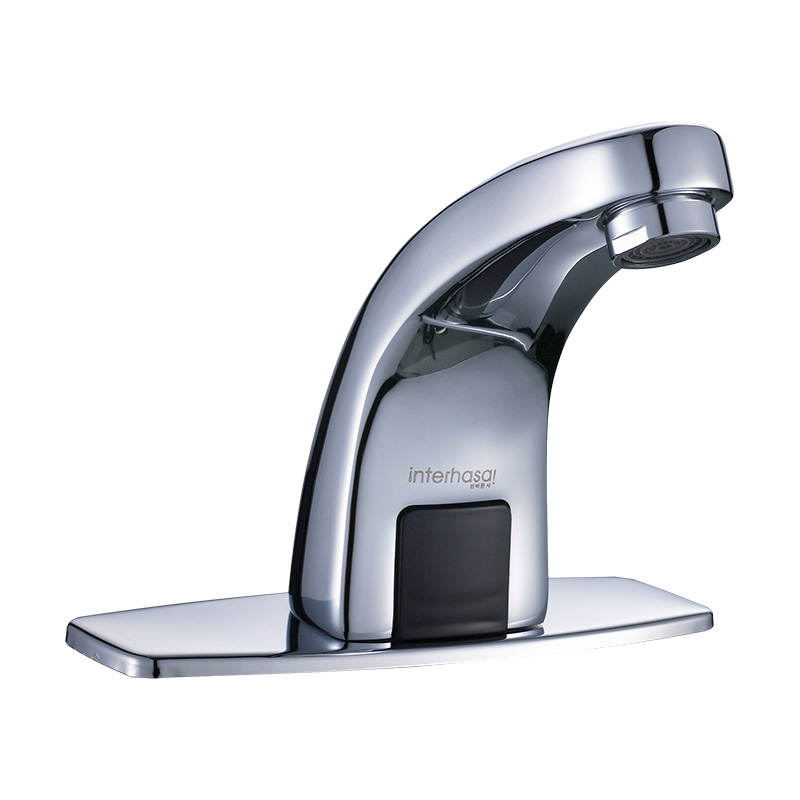
Commercial facilities can achieve full compliance with LEED v4.1, CalGreen Title 24, and EPA WaterSense standards by installing efficient water saving sensor faucets. Interhasa automatic sensor faucet systems reduce commercial restroom water usage by up to 70%.
By combining infrared sensor activation with low flow rates, these fixtures lower utility bills and help projects earn valuable green building credits. This guide explains how commercial plumbing fixtures comply with water saving standards while delivering optimal operational performance.

The typical GPM output of a commercial manual faucet is 2.2 gallons per minute GPM. People often keep manual valves on when scrubbing and drying soapy hands. The automatic touchless faucet stops water flow immediately after hands have moved out of the sensor range.
Studies suggest that an automatic faucet uses 1 gallon of water less per handwashing cycle than a traditional manual handle faucet. A busy commercial airport or school restroom facility can save more than 30,000 gallons each year per fixture. Notably, touchless electronic faucets avoid flooding resulting from manually open valves in public restrooms.
In addition, low water usage translates into energy savings on water heating for commercial facilities. Lower water usage results in lower natural gas or electricity charges for commercial facilities. Commercial property owners reduce maintenance costs due to lack of mechanical handle use on the touchless electronic controls.
The Leadership in Energy and Environmental Design (LEED) rating system awards points for indoor water reduction. Building projects earn WE Credit: Indoor Water Use Reduction by specifying a low-flow leed sensor faucet. Baseline calculations require a 20% reduction below standard federal flow baselines for baseline point thresholds.
A 30%-50% water savings results in up to 6 LEED points for commercial developments. Inclusion of a 0.5 GPM touchless faucet facilitates easy meeting of mandatory LEED efficiencies by commercial projects. Mandatory compliance is based on certified documentation on the flow rates, technical specifications sheets, and third-party plumbing certification.
CalGreen Title 24 provides strict green building regulations for new commercial buildings. Section 5.303.3 in CalGreen stipulates a mandatory lavatory flow rate of 0.5 GPM for public commercial toilets. Use of a compliant watersaving sensor faucet ensures that mandatory building standards of California state are met for all commercial districts.
Engineered with a high-efficiency 0.5 GPM flow restrictor to meet mandatory CalGreen and LEED indoor water reduction standards. Features solid brass construction and fast infrared activation for heavy-traffic restrooms.
Explore Product
The US Environmental Protection Agency (EPA) handles the certification of plumbing products via its WaterSense program. Any WaterSense certified faucets should be able to operate with 20% greater efficiency compared to regular federal baseline fixtures. Commercial lavatory touchless faucets should have a maximum flow rate of 1.5 GPM.
In order to be WaterSense certified, water spray coverage, cycle efficiency, and structural valve durability when subjected to constant hydraulic pressure is confirmed by independent laboratory tests. Performance tests regarding sensor response time, battery performance, and valve durability are conducted through daily operation.
Certified fixtures display the official EPA WaterSense label on product packaging and technical specification literature. International buyers from Europe and elsewhere look out for third-party certifications in order to comply with regulatory requirements during the procurement process.
Selecting the correct sensor faucet GPM specification depends on your specific facility type and foot traffic. Aerators with a maximum flow rate of 0.5 GPM or 0.35 GPM need to be installed in public restrooms in office buildings, airports, and stadiums. Aerators of 1.0 GPM or 1.5 GPM are commonly used in executive bathrooms or hotel guest rooms.
Modern electronic aerators add air to the water flow to sustain water pressure with a low flow rate. Brass body, solenoid valve life span, and infrared detection range are important technical parameters of the selection of aerators.
Selection of proper sensor power systems, such as AC/DC transformer, DC battery, or power module, avoids system malfunctions. Dual Power sensors automatically switch to the battery mode in case of grid power failure.